
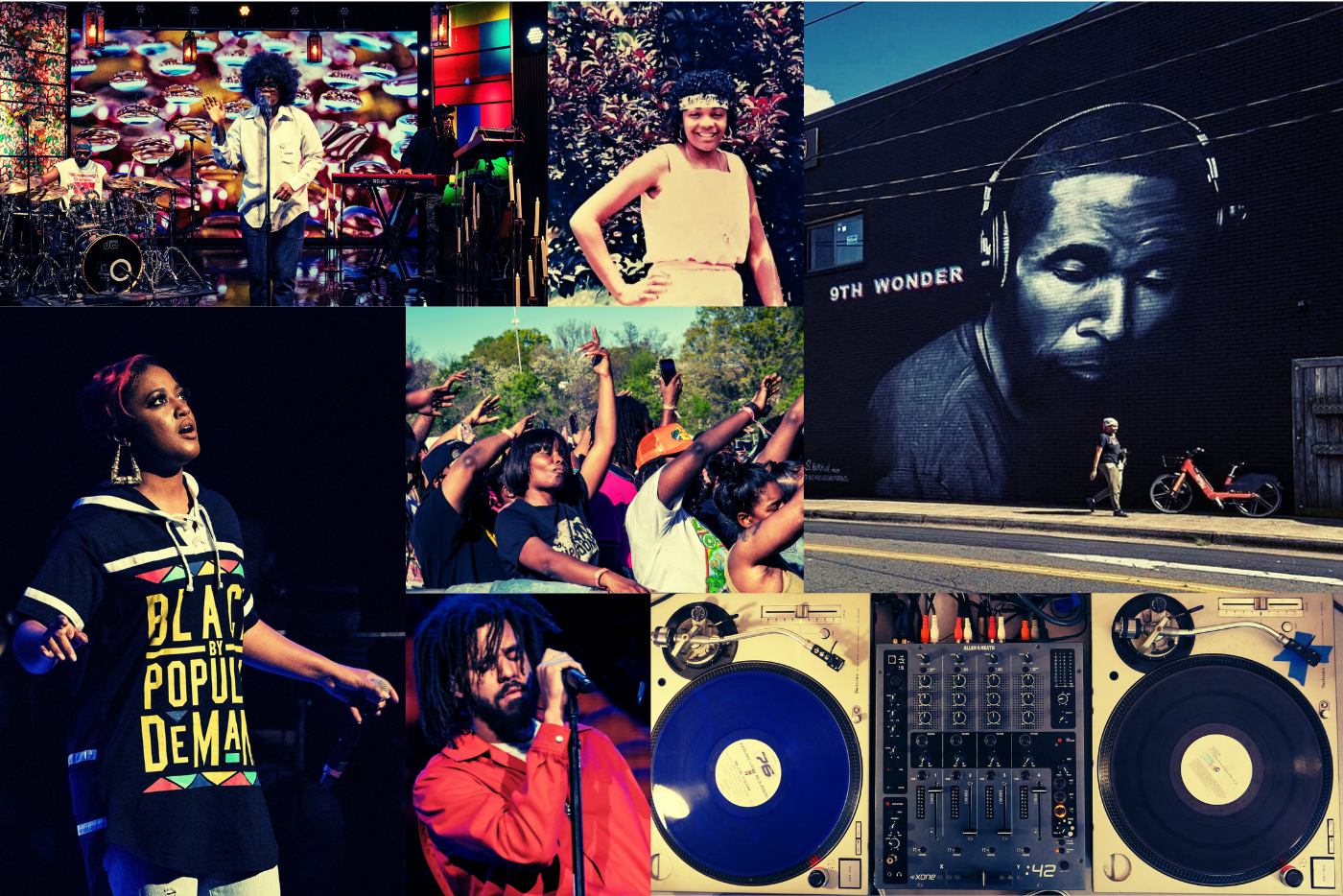
Header image: top left, Cyanca; top middle, MC Sha-Rock; top right, Ninth Wonder mural; lower left, Rapsody; middle, Dreamville festival crowd; lower middle, J. Cole; lower right, two turntables and a mixer
Prehistory: Samples
Rap was born in the South Bronx borough of New York City in the late 1970s. The nascent form drew heavily from styles developed by Jamaican disc jockeys in the 1960s and 1970s, who toasted (bantered in rhyme) over instrumental reggae records. In the 1980s, having exploded in New York, rap and its offshoot, hip-hop, set up a second homebase in California. As recently as the early twenty-first century, the Midwest and the South were popularly considered to be fly-over regions, no-man’s lands for rap production.
So what could the origins of rap and hip-hop possibly have to do with North Carolina?
Even today, when the metropolitan gatekeepers of rap deign to consider the South, they still espoused the coastal elitist position of those “who typically dismiss southern rap as primitive, simplistic and wack (‘except for OutKast,’ the cliché goes),” according to Jeffrey Ogbonna Green Ogbar, in Hip-Hop Revolution. But in the 1990s when the dominant narratives of rap history were being codified, even Atlanta superstars OutKast didn’t always get a pass. When André 3000 of OutKast proclaimed at the 1995 Source Awards ceremony that “the South got something to say!,” his New York audience answered him with boos and jeers. Imagine what the response would have been if a rap artist from North Carolina had said what “3 Stacks” did.
With the benefit of hindsight, however, North Carolina’s role in the beginnings of rap is clear. In fact, this state had a role from before the beginning: many of the most essential early rap music sampled Carolina funk, soul, and jazz records. Now the essential building block of rap as it disambiguated itself from disco was the break: a one-to-two bar sample of percussion looped by a DJ to give MCs something to rap over. And the break’s where North Carolina comes in. For starters, perhaps the most famous break in rap history is the Amen break from the Winstons’ recording of “Amen Brother.” (Rivals from elsewhere are James Brown’s “Funky Drummer” and the Incredible Bongo Band’s “Apache.”) Richard Lewis Spencer, of Wadesboro and Charlotte, led the Winstons and is credited with writing “Amen, Brother”—the B-side of “Color Him Father”—but the Amen break itself comes from six seconds of drummer Gregory C. Coleman’s playing. A fundamental part of the genetic code of rap (and many other genres, from drum-and-bass to pop), the Amen break shows up everywhere once you start listening for it: on landmarks such as N.W.A.’s “Straight Outta Compton” and Salt-N-Pepa’s “I Desire,” jams by Stetsasonic, Ultramagnetic MCs, Mantronix, and Kool G Rap, and countless lesser known, local, and so-called random rap tracks.
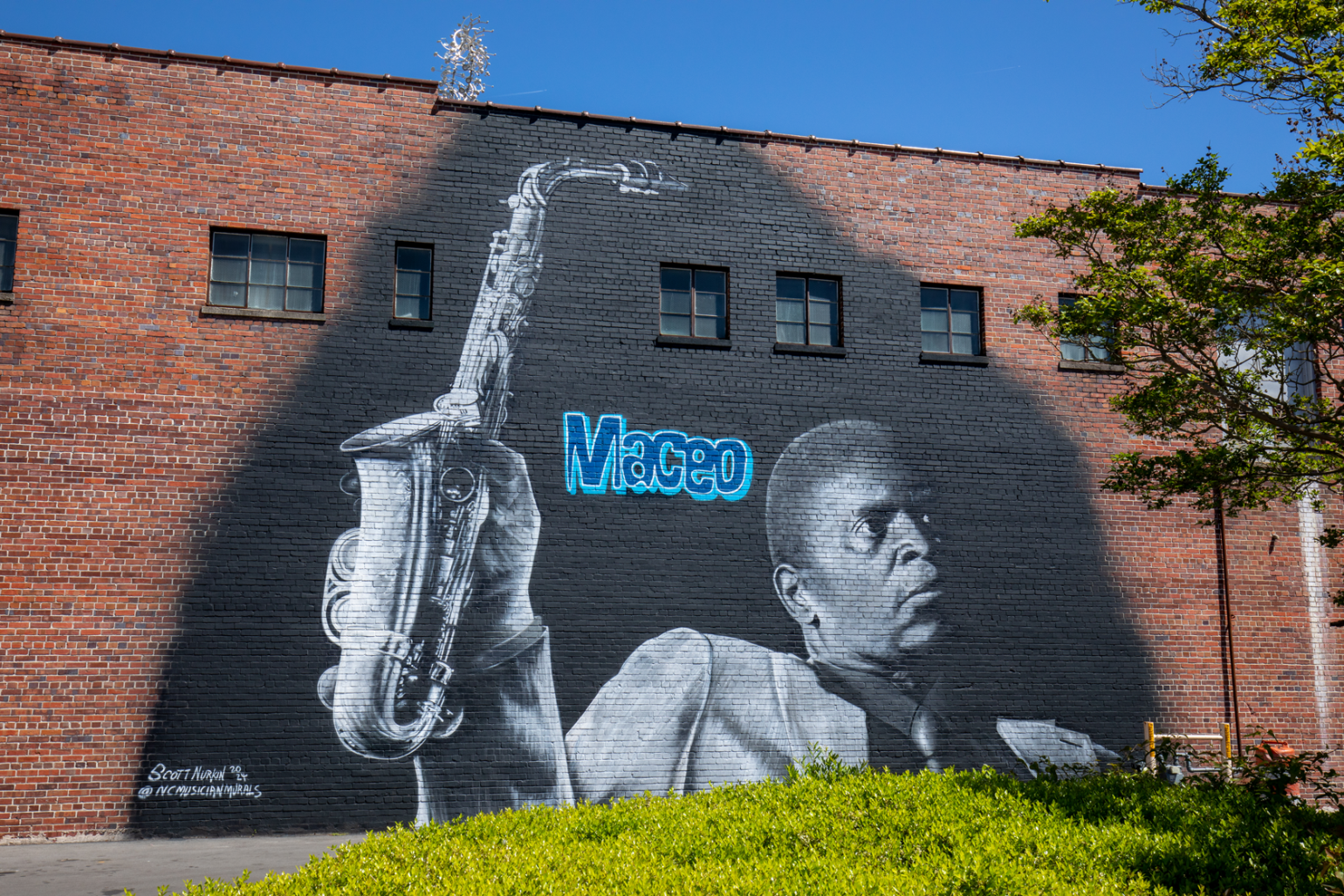
The Amen break is far from the only classic hip-hop sample with Tarheel roots. The Kinston, NC, trumpeter Maceo Parker has had a far-reaching effect on the genre in his work with James Brown; Fred Wesley and the Horny Horns; Parliament-Funkadelic (P-Funk); and his own group, the Macks. Both the alarm-siren sound from “Cross the Tracks” and the horn loop of “Soul Power ‘74” (both by Maceo and the Macks) are key hip-hop building blocks; Fred Wesley’s cover of Parliament’s “Up for the Down Stroke” (written and produced by the Kannapolis, NC, native George Clinton) drives both Notorious B.I.G.’s iconic “Machine Gun Funk” and 2Pac’s “Heartz of Men,” to name only two iconic examples. And later in his career, Maceo more directly participated in hip-hop culture, playing horns on both De La Soul’s Buhloone Mindstate, in 1993, and collaborating with Prince on some of his more funk-and-rap-inflected jams in the 2000s.
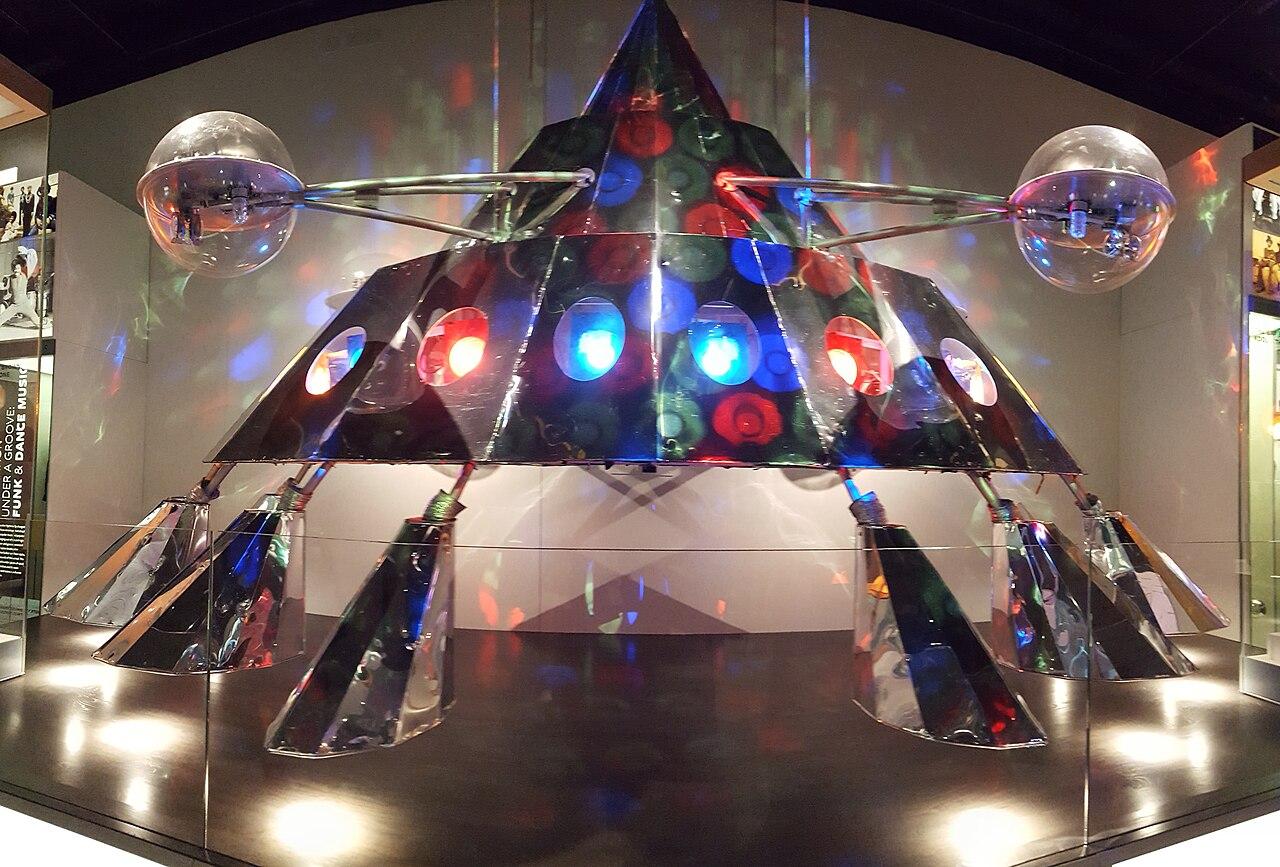
The widely successful and influential “G-Funk era” inaugurated by Dr. Dre, Snoop Dogg, and the D.O.C. in the early 1990s would never have gotten off the ground without the work of George Clinton. The basis for Dr. Dre’s California “gangsta” sound leaned so heavily on P-Funk’s synths and cruising-friendly grooves (mixed with a heavy dose of southwest Ohio funk, a “First in Flight”/“Birthplace of Aviation” crossover event) that it’s no surprise that G-funk lyrics and videos ritually paid homage to Clinton.
Consider the Dr. Dre hit “Let Me Ride” (1993). The song liberally samples Parliament’s “Mothership Connection (Star Child)” and the video’s final minute imagines Dr. Dre and friends attending a P-Funk concert in Los Angeles, intercutting between archival footage of Clinton and P-Funk playing “Mothership” with then-contemporary B-roll footage of low-rider cars. The video hammers home California G-Funk’s deep debt to Carolina-birthed P-Funk music in its last frames, as Clinton’s face crossfades into Dr. Dre’s. Other G-Funk anthems are just as blatant in their P-Funk worship, with hits such as Warren G’s “Regulate” and Ice Cube’s “Bop Gun” also mining “Mothership Connection” and Snoop Dogg’s first single, “Who Am I (What’s My Name)?,” catchily cloning the entire hook of George Clinton’s “Atomic Dog.”
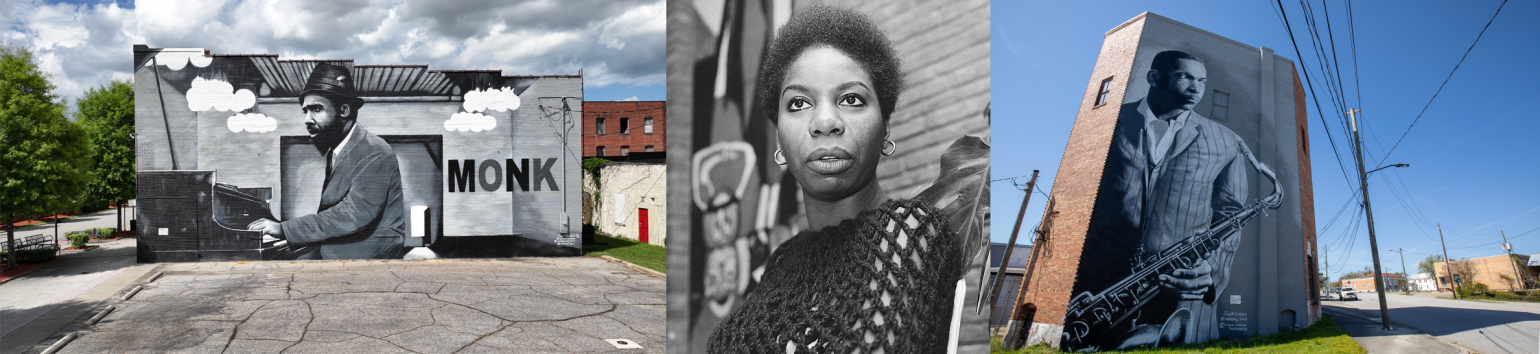
The work of North Carolina’s “big three” jazz artists—Tryon’s Nina Simone, Rocky Mount’s Thelonious Monk, and High Point’s John Coltrane—has had such an influence on all musical genres for so long that, of course, it’s inevitably had a deep impact on rap. Nina Simone’s voice and percussive piano show up everywhere, from multiplatinum albums by Lil Wayne to obscure 12-inches. Monk’s take on Duke Ellington’s “Black and Tan Fantasy” creeps in under Raekwon and ODB’s voices at a pivotal moment on the Wu-Tang Clan’s epochal Enter the Wu-Tang (36 Chambers) album. Elsewhere on the same album and related solo projects of the era, Wu producer the RZA deployed samples from Monk’s albums Brilliant Corners and Thelonious Monk with John Coltrane. New York super producer DJ Premier flipped Monk’s “Light Blue” for Gang Starr’s “Jazz Thing,” and A$AP Rocky sampled a whole section of Monk’s “Caravan” for “ROBBERY,” his 2026 collaboration with Doechii.
Even before Chuck D, of Public Enemy, rapped
Writers treat me like Coltrane, insane
Yes to them, but to me I’m a different kin
We’re brothers of the same mind, unblind
on 1988’s breakout “Don’t Believe the Hype,” anyone looking to push the boundaries of hip-hop probably felt a kinship with Coltrane and his improvisational explorations with sound and noise. The legendary rapper Rakim, for one, modeled his flows on Coltrane’s soloing. Without planning to, then, North Carolinian musicians in the 1960s, 1970s, and 1980s were creating drum patterns, adlibs, melodies, self-presentations, lingo, and visuals that would become essential to hip-hop.
The Old School
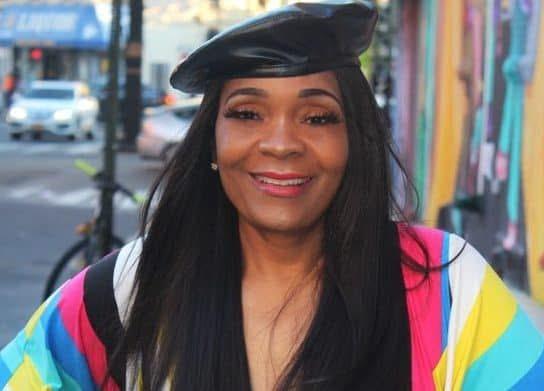
Alongside Sugarhill Gang’s “Rapper’s Delight” (1979) and Kurtis Blow’s “The Breaks” (1980), Funky Four + 1’s “That’s the Joint” (1980) stands as a pivtoal moment in early rap history. The “+ 1” of the group’s name is the Wilmington-native MC Sha-Rock (Sharon Green). Her verse on this disco rap classic lays the down the law, backing up her claim elsewhere on the track to being “the best female here in this here town [NYC]”:
Sha-Rock is gonna show you how you get real rough
I’m Sha-Rock and I can’t be stopped
For all the fly guys, I will hit the top!
With “Rappin’ and Rocking the House” (1979) and “That’s the Joint,” Sha-Rock was certainly the most prominent female rapper in the critical early years of hip-hop’s entry into the mainstream, between 1979 and 1981. Pivotal early female MCs such as Lisa Lee, Roxanne Shante, Salt and Pepa, Monie Love, and MC Lyte all followed in Sha-Rock’s wake. The first hip-hop group to perform on Saturday Night Live, in 1981, Sha Rock and Funky Four previously also played in such avant-garde experimental spaces as the Kitchen (1980). Samples of “That’s the Joint” are a cornerstone of golden era classics that followed, such as De La Soul’s “Say No Go,” from 3 Feet High and Rising, and two of the best songs on the Beastie Boys’ album Paul’s Boutique (“Shake Your Rump” and “Shadrach”). The notoriously finnicky Village Voice music critic Robert Christau even named “That’s the Joint” his number 1 song of the entire 1980s. All this is to say that Wilmington’s Sha Rock (the “Mother of the Mic”) and Funky Four + 1, without hyperbole, changed hip-hop history forever.
The Golden Age
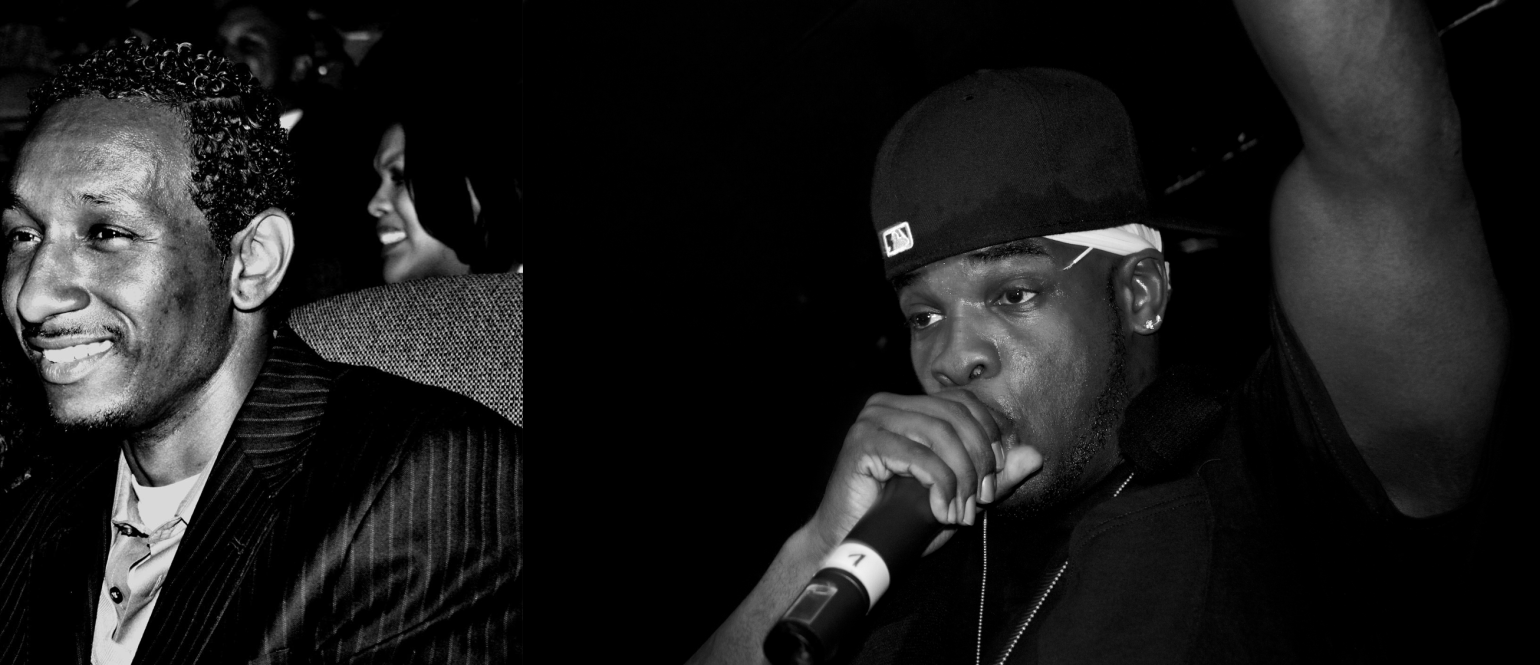
During rap’s “golden age” between the late 1980s and the mid-1990s, North Carolina talent helped to make rap culture almost synonymous with mass culture. The members of the duo Black Sheep—Dres and Mista Lawnge—met and bonded during their teenage years in Sanford, NC. Today most famous for their hit “The Choice Is Yours” (“you can get with this/or you can get with that”), the Black Sheep were affiliates of the Native Tongues collective alongside more famous members such as a Tribe Called Quest and De La Soul. Like all Native Tongues members, the Black Sheep sought to introduce jazzier samples and more offbeat lyrics in their music to present a countervailing force to the predominance of ultramacho gangsta rap in the mid-1990s.
Fans of the Yo! MTV Raps/BET Rap City-era of 1990s hip-hop will remember the Lords of the Underground’s seminal “Chief Rocka,” but few know that the group met at Shaw University, in Raleigh. As with contemporary groups such as Das EFX, Lords of the Underground (L.O.T.U.G.) put out one of the strongest singles of the golden era of hip hop and then got lost in the shuffle while others (Nas, B.I.G., Tupac) continued to ascend. A member of Lords of the Underground, the rapper DoItAll (Dupre Kelly) is now on the City Council of Newark, NJ. His line, “I live for the funk/I die for the funk,” is sampled on “Machine Gun Funk,” by B.I.G., and he can be heard on the 1990’s remix of Nas’s song, “Where Are They Now?.”
Speaking of B.I.G. and Tupac, the two most beloved rappers (and star-crossed rivals) of the 1990s, both have connections to North Carolina that informed their work. Biggie’s time in the Triangle has become somewhat infamous: in 1991 and 1992, he sold illegal narcotics in Raleigh under the moniker “Fat Chris,” lived off Tryon Road, and partied at Groucho’s, Tremors, and Fevers. Tupac’s mother, Afeni Shakur, was born in Lumberton. Later in life, she retired there; as a result, the legendary rapper’s ashes and tombstone today can be found in the “yard of a long-abandoned house surrounded by rusted fencing and overgrown weeds.”
Starting in 1994, the producer Ski Beats (David Anthony Willis), from Greensboro, helped build the sonic signature of not one but two high-profile artists: the well-loved favorite of “real hip-hop heads” Camp Lo, and the international superstar Jay-Z. Ski Beats drafted the New York sound’s blueprint on two golden age classic albums: Camp Lo’s Uptown Saturday Night and Jay-Z’s Reasonable Doubt, especially on tracks like Camp Lo’s “Luchini,” “Coolie High,” and “Krystal Karrington,” and Jay-Z’s “Dead Presidents,” “Feelin’ It,” and “Streets Is Watching.” During and since, Ski Beats has also produced memorable songs for Fat Joe, Lil’ Kim, and Freddie Gibbs. In 1994, early on in their collaboration, a pre-fame Jay-Z and Ski Beats performed live at Greensboro’s North East High School.
The Silver Age
For many casual fans in the United States, it was Petey Pablo’s 2001-produced smash song, “Raise Up” (produced by Timbaland, of Norfolk, Virginia), that put North Carolina rap on the map. Both the lyrics and music video for “Raise Up” are supersaturated with local “Cackalack” content. The video for “Raise Up” begins with an establishing shot of the street signs at the corner of New Bern Avenue and Raleigh Boulevard, in east Raleigh, and cuts to a crowd draped in Carolina blue. With the rousing, catchy chorus “North Carolina, come on and raise up,” and rapid-fire verses name-checking locales from Sandy Ridge, in Stokes County, to Pasquotank County, several correctional facilities, and “all my little bitty overlooked hick towns,” the song is a love letter to the underappreciated talent and spirit of the Tar Heel state. Pablo followed “Raise Up” with the Lil Jon-produced “Freek-a-Leek” (2004), an ode to libertinism; this one-two punch helped break the path for commercial North Carolina hip-hop. And with these two biggest hits produced by Timbaland of Norfolk Beach and by Lil Jon, of Atlanta, Petey Pablo also broke a path for North Carolina within the ascendance of Southern rap.
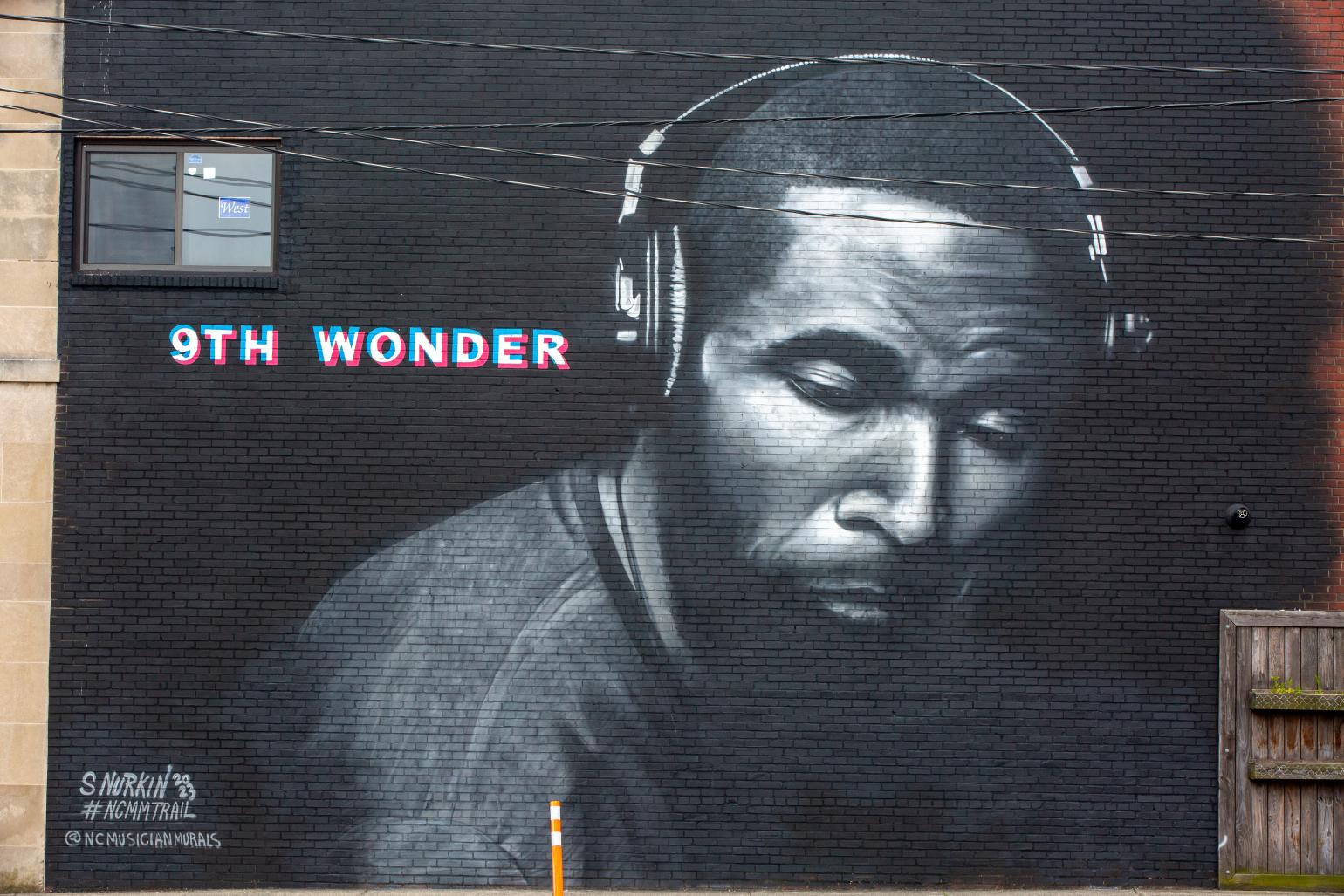
Around the same time, things were percolating in the underground scenes. In 1998, three first-year rap fans at NC Central University started freestyling over instrumentals in a campus dorm room. Adopting the names Big Pooh, Phonte, and 9th Wonder, they initially created music as part of the 15-member crew Justus League. A loose consortium of rappers such as Edgar Allan Floe and Median, DJs such as Flash, and producers such as Khyrsis, the Justus League was the matrix from which Big Pooh, Phonte, and 9th Wonder formed Little Brother. At this point, NC Central was already famous for its jazz and funk connections. Donald Byrd taught music there, and alumnus Ernie Barnes painted iconic funky music album covers for Byrd, Marvin Gaye, and Curtis Mayfield (as well as the NCCU Sound Machine Marching Band performing on the streets in Durham).
Over the span of five studio albums and six mixtapes, the Little Brother sound found the lane between conscious and party rap, with Big Pooh and Phonte riding 9th Wonder’s soul-flips and drums adding finesse and heart to the boom bap aesthetic. Without coming off as didactic, Little Brother managed to get deep on big topics, such as racial masquerade, on The Minstrel Show; the grind of economic exploitation, on “Speed”; and the hyper-commercialization of black creativity, on “The Listening.” From grassroots beginnings, Little Brother’s music started generating a cult following on forums of the hip-hop and alternative music website Okayplayer. Soon, laurels and collaboration requests started coming in from big-time rap figures such as Kanye, De La, and the Roots. Early Drake efforts cribbed heavily from the Little Brother blueprint, and to a lesser but significant extent Little Brother was also a significant influence on Fayetteville’s J. Cole (more later).
As Little Brother became more well-known, 9th Wonder became an increasingly in-demand producer. His general method paired flips of soul hooks with classic boom-bap percussion, and it helped define the early twenty-first century rap sound. The fact that 9th Wonder made many of his beats in Fruity Loops, a no-frills piece of freeware, showed his talent for blending do-it-yourself analog sampling with equally DIY digital percussion. Soon, he was producing tracks for such luminaries as Kendrick Lamar (“Duckworth,” DAMN.), Jay-Z (“Threat,” The Black Album), De La Soul and Spike Lee (“Church,” The Grind Date), Destiny’s Child (three songs on Destiny Fulfilled), Mary J. Blige (“Good Woman Down,” The Breakthrough), Drake (“Think Good Thoughts,” with Phonte), and a host of other top (or famous) MCs. 9th Wonder has also branched out into education, teaching courses on hip-hop history at NC Central and mentoring fellow NC artists such as Rapsody and Reuben Vincent (see below).
The Contemporary Moment
In the wake of Little Brother’s success, several NC artists consciously or unconsciously followed the group on a more DIY, internet-based path to a career in hip-hop. Durham’s G Yamazawa’s track “North Cack” took the state by storm in 2017, joining Petey Pablo’s “Raise Up” as one of the few state-pride rap anthems that isn’t objectively corny. Yamazawa has since expanded his artistic practice, continuing to make lyrically complex self-reflexive rap but also directing a documentary—Becoming Yamazushi —about his family’s sushi restaurant, the first of its kind in Durham. Because the internet and social media have reconstructed the way music is listened to, compensated, and promoted, many DIY artists have been experimenting with less regionally rooted sounds, incorporating the polyphony of rap styles that listeners are exposed to online. These include but are by no means limited to grassroots hip-hop talents such as Jooselord (Durham), Big Mali (Henderson), Ace Henderson (Raleigh), Shame Gang (Raleigh), Lord Fess (Durham), Les the Genius (Raleigh), wav.yliving (Raleigh), sosocamo (Apex), and thr33 (High Point).
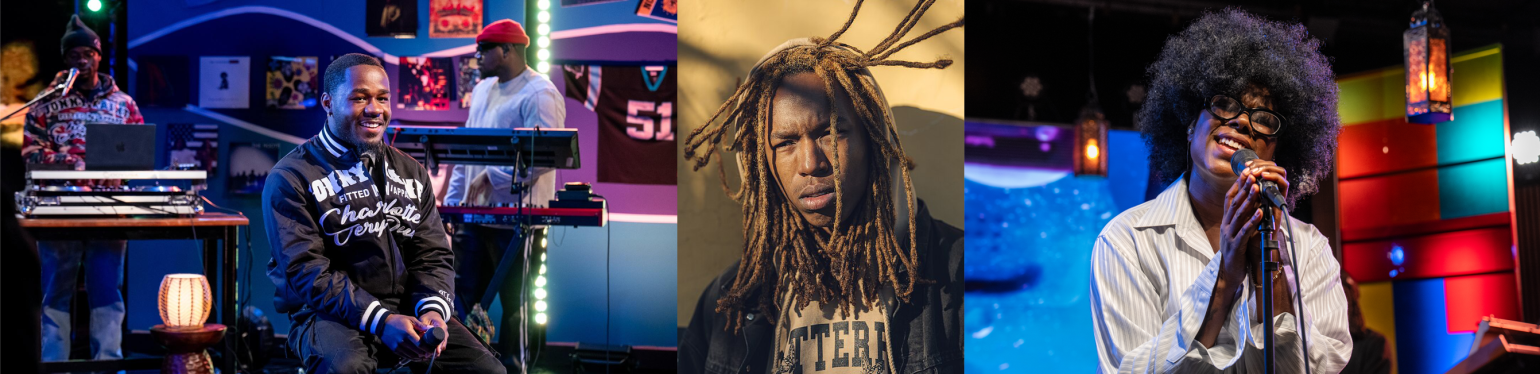
Another twenty-first century shift in NC rap history has been geographical: the emergence of musicians from all over the state, not just the Triangle. In particular, as Charlotte has expanded its national footprint, an explosion of talent has occurred in that city. DaBaby has been the most commercially successful Charlotte rapper. His machine-gun delivery drives the infectious energy of such mega-hits as “ROCKSTAR” and “BOP,” each notching streams in the billions on Spotify. His career has been mired in controversy, however, after he made homophobic remarks from the stage at the 2021 Rolling Loud festival. DaBaby’s fame (and infamy) should not overshadow Charlotte’s general hip-hop renaissance. Cordae, starting as a member of the trio YBN, has proven himself to be a compelling storyteller who favors fundamentals over flashy novelty on such albums as The Lost Boy and The Crossroads.
MAVI, emerging out of the collective KILLSWITCH, has blended surreal wordplay with emotive reflections on faith, lost love, commercialism, and the search for truth. A frequent collaborator with Earl Sweatshirt, MAVI has a penchant for abstraction and playfulness in language that makes him part of a wave of rappers pushing the form forward. And bubbling up in Charlotte is a host of other hip-hop talents, They range in style between the poles of DaBaby’s radio rap and MAVI’s cerebral meditations: artists such as prettifun, Fetty P. Franklin, Gauxstman, TopOppGen, Lord Jah-Monte Ogbon, and leroy & Ducee’ Drop-Top and more established up-and-comers such as Reuben Vincent and LUCI. The Smithfield-raised artist Cyanca now calls Charlotte home. Both Cyanca and Reuben Vincent have appeared on Shaped by Sound, the Come Hear NC Music Office and NC Arts Council’s collaboration with PBS NC. Cyanca blends neo-soul meditations in the early style of her idol, singer Eryka Badu, with light-touch rhyming on such stand-out tracks as “New Phone, Who Dis?” and “Jesse Jackson.”
By far the most lauded North Carolina rapper emerged relatively recently, in 2007: Fayetteville’s J. Cole. Today, Cole is known by even casual music fans as having helped to instigate the notorious conflict during the spring and summer of 2024 between the rappers Kendrick Lamar and Drake. Lamar first took umbrage when Cole—on Drake’s song “First Person Shooter”—positioned himself and Drake with Lamar as the “Big Three” (a comparison to basketball players Michael Jordan, Magic Johnson, and Larry Bird). Cole wisely but somewhat controversially made an Irish exit as the conflict between Drake and Lamar boiled over.
But how did Cole earn his place in “Big Three” discussions in the first place? Starting with 2007’s mixtape The Come Up, he began garnering positive attention for his lyricism. Proud of his North Carolina roots, Cole in The Come Up gave us an ode to the Tarheel state: “Carolina on My Mind,” which interpolates the similarly-named James Taylor standard. Here he boasts that in the “Tar Heel State / you either shootin’ or you hoopin’,” notes that he “survived the ‘Ville [ Fayetteville] but a lotta will not,” and maintains that many in the state “can’t wait for the Panthers to win the Super Bowl” (still true).
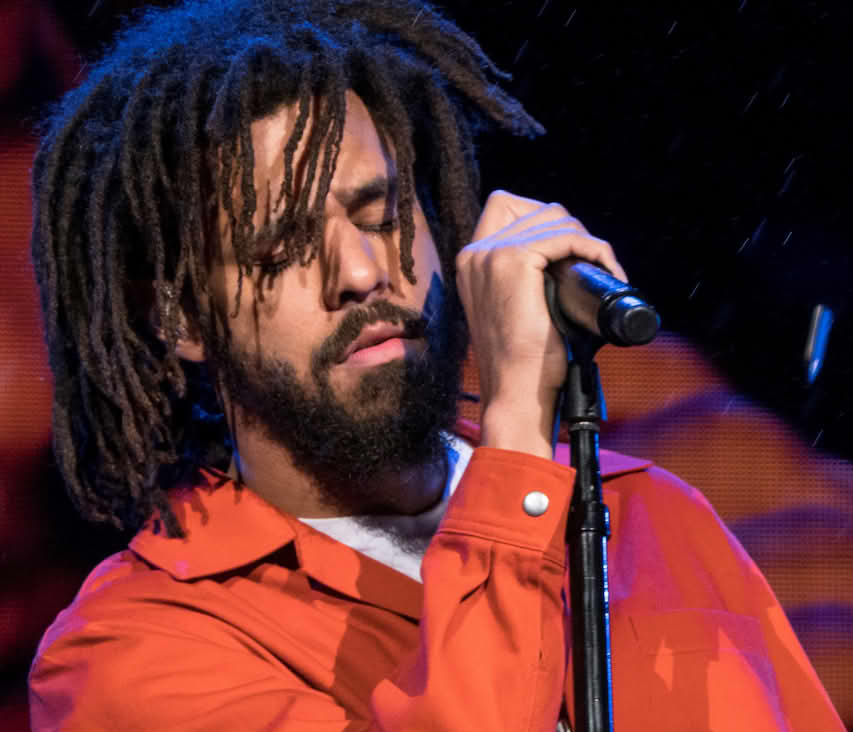
Cole was the first rapper whom Jay Z signed to his label, Roc Nation, after he heard “Lights Please,” from the mixtape The Warm Up, in 2009. The track was also on Cole’s studio debut, Cole World, which he soon followed with Born Sinner. Both records set the early Cole blueprint: gritty street tales told with style and grace; captivating narratives mixed with sometimes too-clever-by-half one-liners and double entendres. Cole handles most of the production on these albums himself, creating serviceable backdrops to his flows, using to good effect the heavy bass beats and soul samples dyad mined previously by 9th Wonder. Standout radio singles soon emerged: Born Sinner’s hypnotic “Power Trip,” the sinuous “She Knows,” and the soulful “Crooked Smile.”
In 2014 Cole gave us 2014 Forest Hills Drive, the name and cover photo referencing the Fayetteville house where he grew up. That record—released on the Dreamville label Cole started in 2007—has become a highlight of his catalog, both for its blend of memoir and mythmaking and for such standout singles as “No Role Models,” with cheeky lines like, “Martin Luther King woulda been on Dreamville.” The album also birthed a viral meme: “J Cole went platinum with no features,” as the record was a smash commercial success without the star power and novelty that celebrity guest appearances bring.
Since 2014, Cole’s place in the upper echelon of rappers has been secure, even allowing for what he recently called “side quests”: the LPs, EPs, and mixtapes 4 Your Eyez Only, KOD, The Off-Season, and Might Delete Later. Cole has also been busy outside of the record studio, starting several projects under the Dreamville aegis: a long-running music festival in Raleigh, a record label featuring the Charlotte artist Lute and others, a nonprofit organization for youth in Fayetteville, and a media company. In 2026, he released his “last” album, The Fall-Off, to positive reviews and popular support. The record finds him still pondering North Carolina on such tracks as “and the whole world is the ‘Ville”:
The best cyphers was football games
Or at the skatin' rink, wherever all the neighborhoods came
[…]
What I rep to the death is where my steps were first taken
At that same time, my moms felt the earth shakin'
As with T.S. Eliot in “East Coker,” then, it seems that in Jermaine Cole’s beginning is his end (and vice versa).
Snow Hill’s Rapsody (“First name Marlanna / last name Evans,” she raps on “Asteroids”) didn’t begin rapping until she arrived at NC State, where she soon impressed 9th Wonder, who heard her as a part of the group H20, and later with Kooley High. She soon stepped into her own with the mixtape Return of the B-Girl, working with the legendary producer DJ Premier and sometime-Durham-resident Big Daddy Kane. With the mixtape as her calling card, Rapsody soon began racking up high-profile features, including a pivotal appearance on a verse of Kendrick Lamar’s “Complexion (A Zulu Love),” on To Pimp a Butterfly (2015), a meditation on keeping one’s head above water while swimming in the colorism of twenty-first century America. She’s since collaborated with the rap and soul greats Queen Latifah, GZA, Busta Rhymes, Lil Wayne, D’Angelo, Mac Miller, and more.
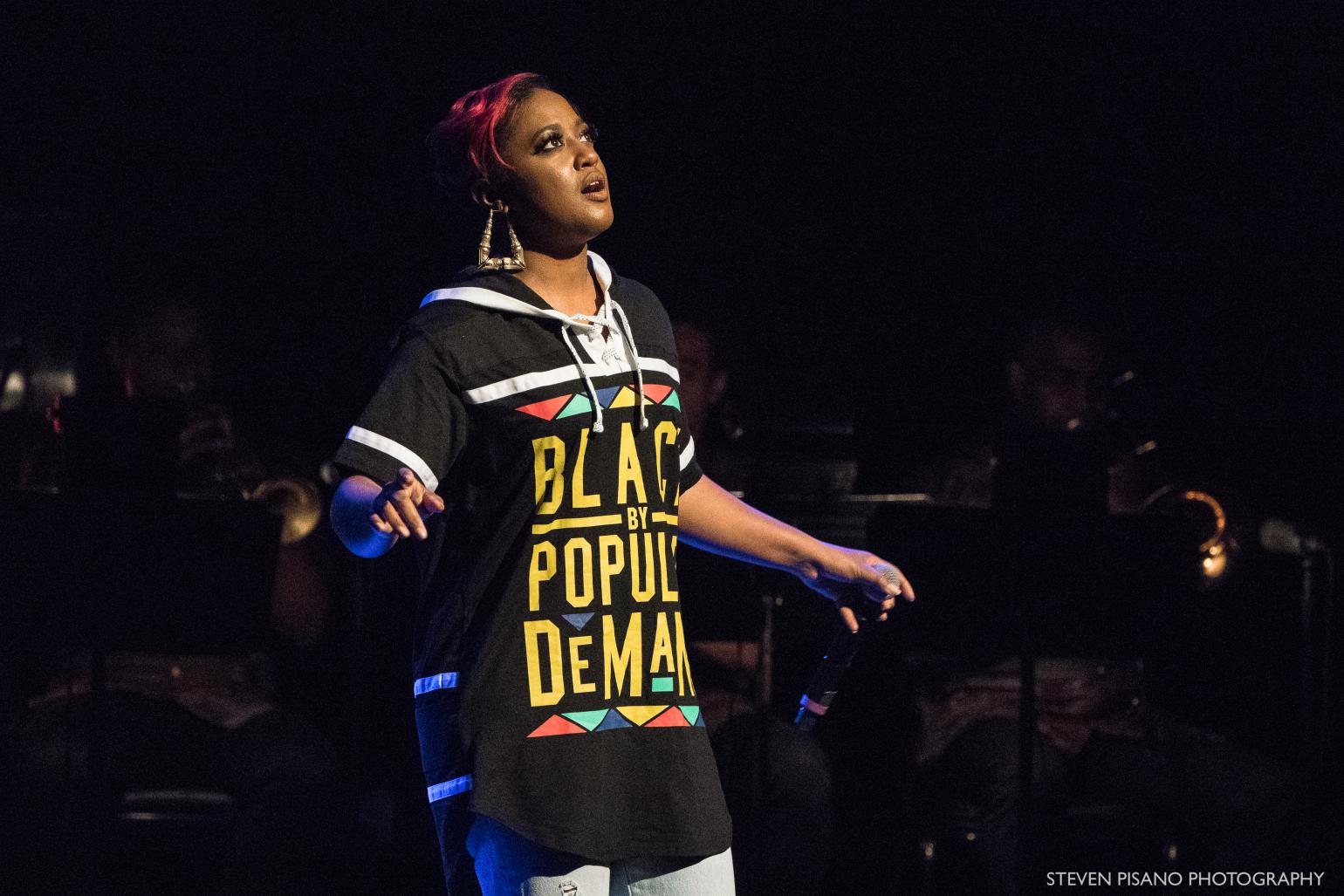
Rapsody has built a rock-solid resumé with the mixtapes Thank H.E.R. Now (2011) and She Got Game (2013), and the LPs Laila’s Wisdom (2018), Eve (2019), and Please Don’t Cry (2024), the latter of which generated Rapsody’s first Grammy win for “3:AM” (featuring Erykah Badu) for Best Melodic Rap Performance. At the time of this writing, she is set to release God Gotta Afro & Gold Hoops, on Roc Nation.
In all of Rapsody’s work, one can find a productive tension between her Carolina roots and her increasingly international career. This has meant a seesaw between Tarheel nostalgia (she’s “reppin’ North Cackalack” on “Back in My Bag”) and a more multilayered feel, as on her collaboration with Nomsa Mazwai, “In The Town,” where she compares her reception in South Africa to back home: “Kinda love Carolina ain’t showing us at all/but we still love Carolina, truly/Kinda love you only see in Hollywood movies.” Despite the complexity of home, Rapsody’s dedication to NC rap culture (her music publishing company is called Culture Over Everything) remains strong: she continues to work with NC talent, such as the producer Khrysis on “Ooowee” and on 2026’s single “Apple Juice,” produced by Durham’s Groove.
At every step, rap’s successes and innovations in North Carolina were nurtured at the grassroots by the state’s music lovers. Since the 1980s, community support for rap here has been steady. AM radio stations such as WEAL 1510, in Greensboro, and WLLE AM 570, in Raleigh, were early adopters, and even as early as 1979, stations in Charlotte such as WPEG had begun dabbling in hip-hop programming. Dance clubs, high schools, and college campuses started making spaces for rap, from NC A&T Gym Jams to the Smush Factor, in Asheville, and other scattered locales across the state. Rap has long had a healthy presence on the state’s airwaves. Mass-market stations such as the Greensboro powerhouse 102 JAMZ and Power 98 in Charlotte and college stations such as WXDU, at Duke, WKNC, at NC State, and others have long supported hip-hop mix shows. Examples are DJ Samps’s Street Flava, on WXDU, and the Underground, on WKNC. These shows often brought in several guests from the North Carolina hip-hop scene, including Bro Rabb, of the Butta Crew, and a host of other mix DJs. In general, both college and mainstream audiences here have long supported rap music—not as an urban special interest but as a welcome part of the state’s mainstream popular culture.