
Shaped by Sound is made possible through the support of the Come Hear NC Music Office (CHNCMO), a program of the North Carolina Arts Council, which is a division of the North Carolina Department of Natural and Cultural Resources.
Shaped by Sound— a PBS NC original series showcasing North Carolina’s thriving music scene—is back. The second season features a bright new lineup of homegrown indie rock, rap, rhythm and blues, country, jazz, bluegrass, folk, and gospel artists.
For the week of St. Patrick’s Day, The Tan and Sober Gentlemen took the spotlight. The timing was not accidental, as the band mixes Irish, Scottish, and mountain music with modern sounds. This “Appalachian cousin of Dropkick Murphys” (Blank Tapes) brings together six musicians from the North Carolina Piedmont united by a shared love of Celtic and old-time music. The Tan and Sober Gentlemen aim to keep these traditional forms compelling for contemporary audiences.
The Scots-Irish influence on North Carolina’s folkways is well-documented. Scots-Irish emigration from the English-occupied province of Ulster, in northern Ireland, to the Carolinas ramped up in the 1720s. This wave was not born of anticolonial protest, as is sometimes assumed, but rather out of economic necessity and the deep Presbyterian antagonism towards Anglicanism. Highlander Scots settled on the Cape Fear River in 1739; another wave of Highland immigrants soon brought roughly 20,000 people to what are today Cumberland, Harnett, Hoke, and Moore Counties.
The ballads, jigs, and reels brought from Scotland and Ireland to our region from the eighteenth century on have become integral parts of American folk culture. They provided tunes, techniques, and arrangements indispensable to the foundation of roots genres such as folk, bluegrass, country, and the blues.
But The Tan and Sober Gentlemen do not duplicate previous versions of the standards. Rather, to adapt a term put forward by the historian Eric Hobsbawm, they invent tradition. As the band’s bassist, Ben Noblit, puts the matter:
It [the band’s sound] comes from traditional music, but it ain’t traditional in the presentation of it. We’re trying to re-blend the North Carolinian and the Irish elements.
As such, the three standards they play on “Shaped by Sound”are not pure instances of 1700s culture taken directly from Belfast, Dublin, or Glasgow. Rather, “Hot Asphalt,” “Follow Me Up to Carlow,” and “Rock Salt and Nails,” were written in 1878, 1899, and 1961, respectively. Each of the three were quasi-commercial productions rather than direct manifestations of an organic folk culture. So just as The Tan and Sober Gentlemen rework these songs for a modern audience, the songs’ composers themselves were doing a very similar thing. To get the most out of the Gentlemen’s episode of Shaped by Sound, then, let’s dig into the history of these three standards (in the order they’re played on the show).
“Follow Me Up to Carlow”
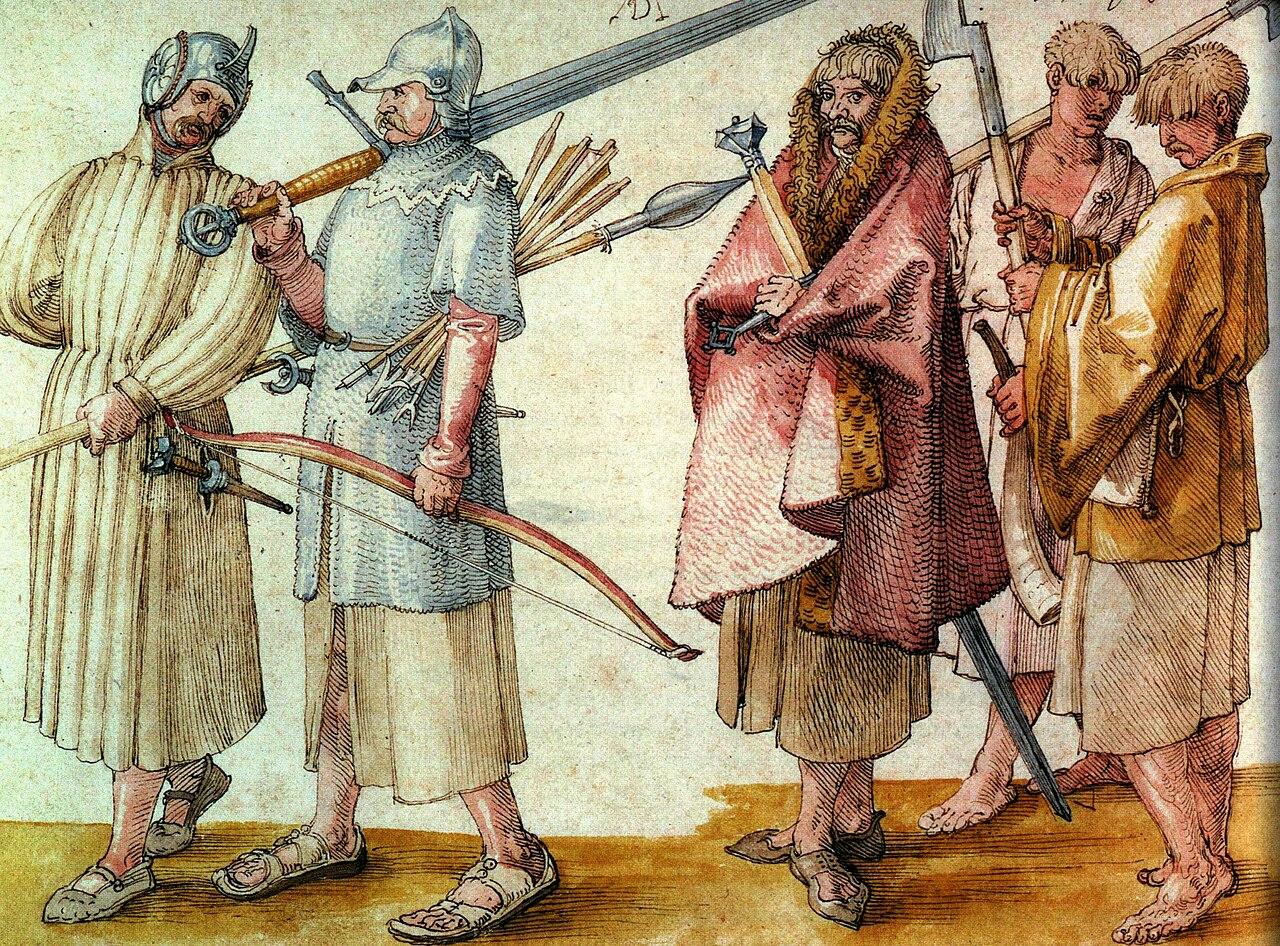
“Follow Me Up to Carlow” tells the story of the Battle of Glenmalure, which occurred in Ireland in 1580. At Glenmalure, a group of Irish clans routed a much larger English army. The battle took place during the so-called Second Desmond Rebellion, during which Irish feudal lords fought to maintain their independence from the rule of Queen Elizabeth I’s Protestant England. The conflict is now best remembered for the English settlers’ adoption of total war, in which Arthur Grey (the English-appointed lord deputy of Ireland and the villain of “Follow Me Up to Carlow”) and others erased the difference between soldier and civilian, and attacked women, children, the disabled, and the elderly to terrorize the Irish.
According to lore, the tune of “Follow Me Up to Carlow” featured in the Battle of Glenmalure itself. Supposedly, the hero of the song, Fiach McHugh O’Byrne—“the Firebrand of the Mountains”—went to war with pipers playing what came to be known as the “Marching Song of Feagh MacHugh.” At least that was the story circulating when the poet P. J. McCall put lyrics to the air and entered it in an 1897 Dublin song contest (where it placed second).
“Follow Me Up to Carlow,” then, despite its 1500s content, is also a product of the Irish Renaissance and Irish Revolutionary movements of the last century. The anticolonial spirit of “Follow Me Up to Carlow” is not simply historical; it’s also contemporary, and as such is as tied to more recent demands for home rule and independence as it is to Irish feudal warfare.
Listened to this way, the song’s sauciness takes on an edge. Its talk of sending a “stream of Saxon gore” running, dispatching “loons to Hades,” and sending a severed head back to Queen Elizabeth I (cheekily tagged “Liza” here) are not antique color in a work of art-for-art’s sake. They’re also threats of a colonized people to an occupying power.
The English eventually crushed the Second Desmond Rebellion, and the southern Irish provinces did not gain full independence from the British until 1921. Northern Ireland remains under British rule. As the Gentlemen’s high-energy performance of the song demonstrates, the song’s fire remains relevant in a world where “post-colonial” powers still colonize.
Selected performances of “Follow Me Up to Carlow”
- 1907: John McCormack, Gaelic League's Irish Music Festival, Queen's Hall, London
- 1965: The Wolfe Tones, The Foggy Dew (Fontana)
- 1973: Plantxty, S/T (Polydor)
- 1980: Jim McCann, S/T (Hawk)
- 1986: Paddy Reilly, Paddy Reilly’s Ireland (Harmac)
“Hot Asphalt”

“Hot Asphalt” was written by a Scottish music hall performer, Thomas Johnstone, who was best known for playing Irish characters. It’s fitting, then, that the song, though written in and set in Glasgow, has, since its 1878 debut, traveled to and around England, Ireland, and the United States. Sometimes rendered as “The Hot Ashfelt,” the song became popular as comic relief for sailors and laborers to sing at gatherings such as the annual dinner of the Amalgamated Slaters and Tilers, in Wigan, England, in 1899.
Told from the perspective of an Irish workingman on a gang paving Scottish roads with tarmac, “Hot Asphalt” projects the joys of working-class solidarity (and defiance) that come with hard toil. In the central incident of the song, a Glaswegian police officer harasses the narrator-singer for being a rabble-rouser from Tipperary. Violence ensues and the offending officer is thrown into the song’s titular hot asphalt. Then, and with a plot obeying surreal comic logic, the tarmac cools and hardens around the officer, after which his encased remains are sent to the Kelvingrove art museum, in Glasgow. There, “hanging by a belt,” this entombed member of “the polis” enters the permanent collection as “an example of the dire effects of hot ashfelt.” Luke Kelly and The Dubliners would later change the lyrics to make the narrator himself the museum piece, now representing “a monument to the Irish/making hot asphalt.”
The song’s populist anti-authoritarian spirit as a “Glasgow Irish” rebel song suits The Tan and Sober Gentlemen’s vibe: its vigorous spirit and puckish sense of humor match the jaunty, raucous energy the band conjures on stage. And the tune, which derives from the Scottish piper’s march “Napoleon Crossing the Alps,” proves easily adaptable to the Gentlemen’s rocking approach to traditional standards. Their version ramps up the tempo and adds some vigorous stomping percussion.
Selected performances of “Hot Asphalt”
- pre-1964: Many music hall and guildhall performances (unrecorded)
- 1964: Luke Kelly and Andy Irvine, Clones Fleadh Festival, Ireland
- 1966: Luke Kelly and The Dubliners, Finnegan Wakes (Transatlantic)
- 1970: Robin Hall and Jimmie Macgregor, Glasgow Street Songs, Vol. 3 (Collector)
- 1972: Ewan MacColl and Peggy Seeger, Songs from Radio Ballads (Argo)
- 1992 (recorded): The Pogues, Just Look Them Straight in the Eye and Say… Pogue Mahone! (Warner Brothers, released 2008)
“Rock Salt and Nails”
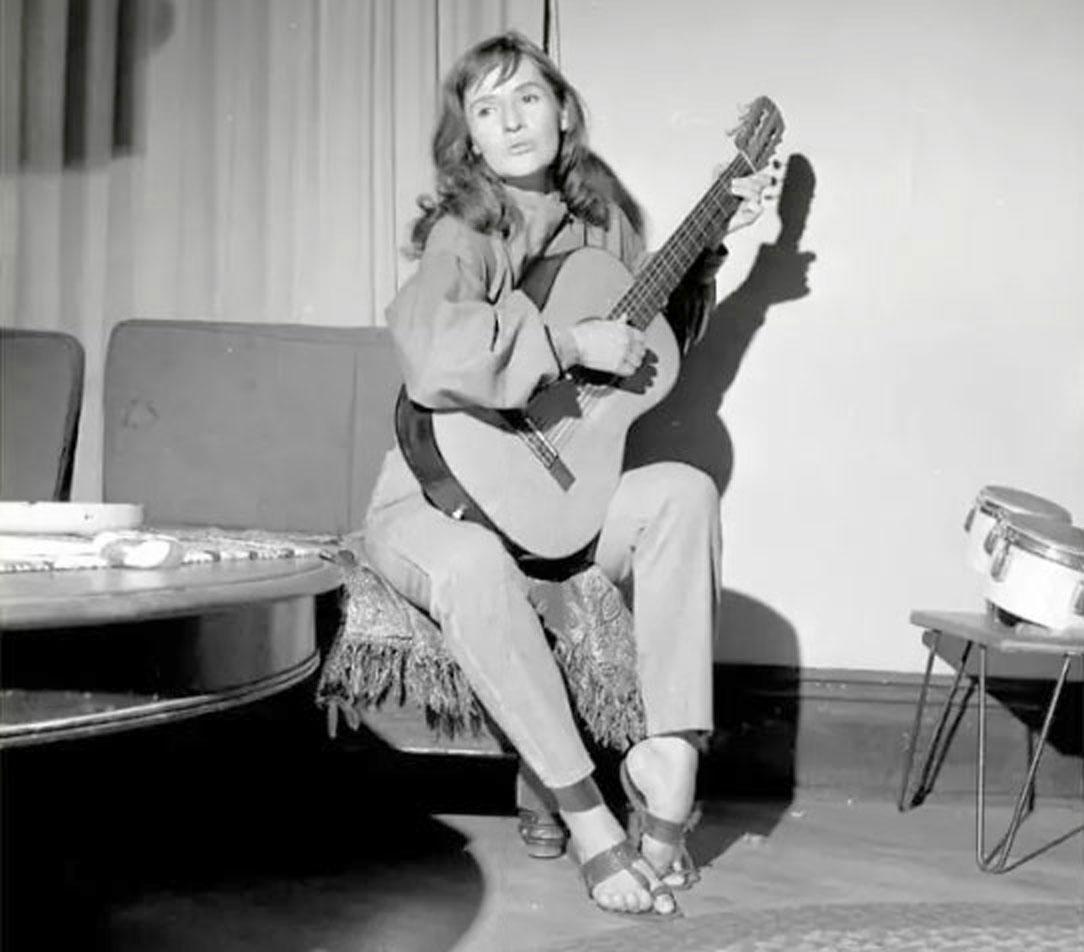
Bruce “Utah” Phillips wrote “Rock Salt and Nails” in 1961. But the breakup that inspired the song was so raw he couldn’t bring himself to record it. Instead, he gave “Rock Salt and Nails” to his close friend and collaborator Rosalie Sorrels to sing. Her performance of the tune set the blueprint for subsequent ones: it’s haunting and minimal (just voice and acoustic guitar), with an approach that allows the listener to process the odd conceit at the center of the song (i.e., “if the ladies was squirrels”) and decode the sadness that it masks with anger. Flatt & Scruggs, with a different approach, smoothed out the song’s rough edges, adding some fine harmonies and a back porch harmonica. During Bob Dylan’s vaunted Basement Tapes recordings in Woodstock, NY, in 1967, Dylan and The Band gave the track a stoned but stately reading; Joan Baez followed in 1969 with a more austere take.
Also in 1969, Steve Young (the Southern singer-songwriter, not the 49ers quarterback) put out the most celebrated version of the song on an LP also called “Rock Salt and Nails.” Young’s voice is the main attraction here, putting over the lament’s lovelornness without sounding overwrought. The next year, Waylon Jennings took a more melodramatic approach to his vocals than Young, trading lines with an instantly recognizable Lee Hazlewood. John Martyn’s 1990s take is ragged and unfocused but graced by guest vocalist Levon Helm, of the Band. Buddy and Julie Miller’s 2001 take has many admirers, and it’s by dint of the intense power of Tyler Childers’s recent interpretation that the song has again become well-known to a new generation of Americana fans
The Tan and Sober Gentlemen’s straightforward reading of “Rock Salt and Nails” on Shaped by Sound proves their musical range. The performance shows their softer side, adding another entry to a long history of fine renditions of an enduring snapshot of jilted love and stifled rage.
Selected performances of “Rock Salt and Nails”
- 1961: Rosalie Sorrels, Rosalie’s Song Bag (Prestige)
- 1965: Flatt & Scruggs, The Versatile Flatt & Scruggs (Columbia)
- 1967 (recorded): Bob Dylan & the Band, The Basement Tapes Complete (Columbia, released 2014)
- 1969: Joan Baez, David’s Album (Vanguard)
- 1969: Steve Young, Rock Salt and Nails (A&M)
- 1970: Waylon Jennings (w/ Lee Hazlewood), Singer of Sad Songs (RCA Victor)
- 1993: John Martyn (w/ Levon Helm), No Little Boy (Mesa)
- 2001: Buddy and Julie Miller, Buddy & Julie Miller (Hightone)
- 2016: Tyler Childers, Live on Red Barn Radio I & II (Hickman Holler)