
In McDowell County, in western North Carolina, a composer and pianist, Nathan Shirley, perceived an obvious gap in his region’s primary music education. Out of the county’s eight public elementary schools, only three had music teachers. It seemed clear to Shirley that as a result, students in his county were missing something essential: the proven benefits music education provides to children’s “cognitive development, emotional intelligence, social skills, and physical coordination.” In Shirley’s view, music education was anything but frivolous. It taught young people foundational physical, emotional, and intellectual skills.
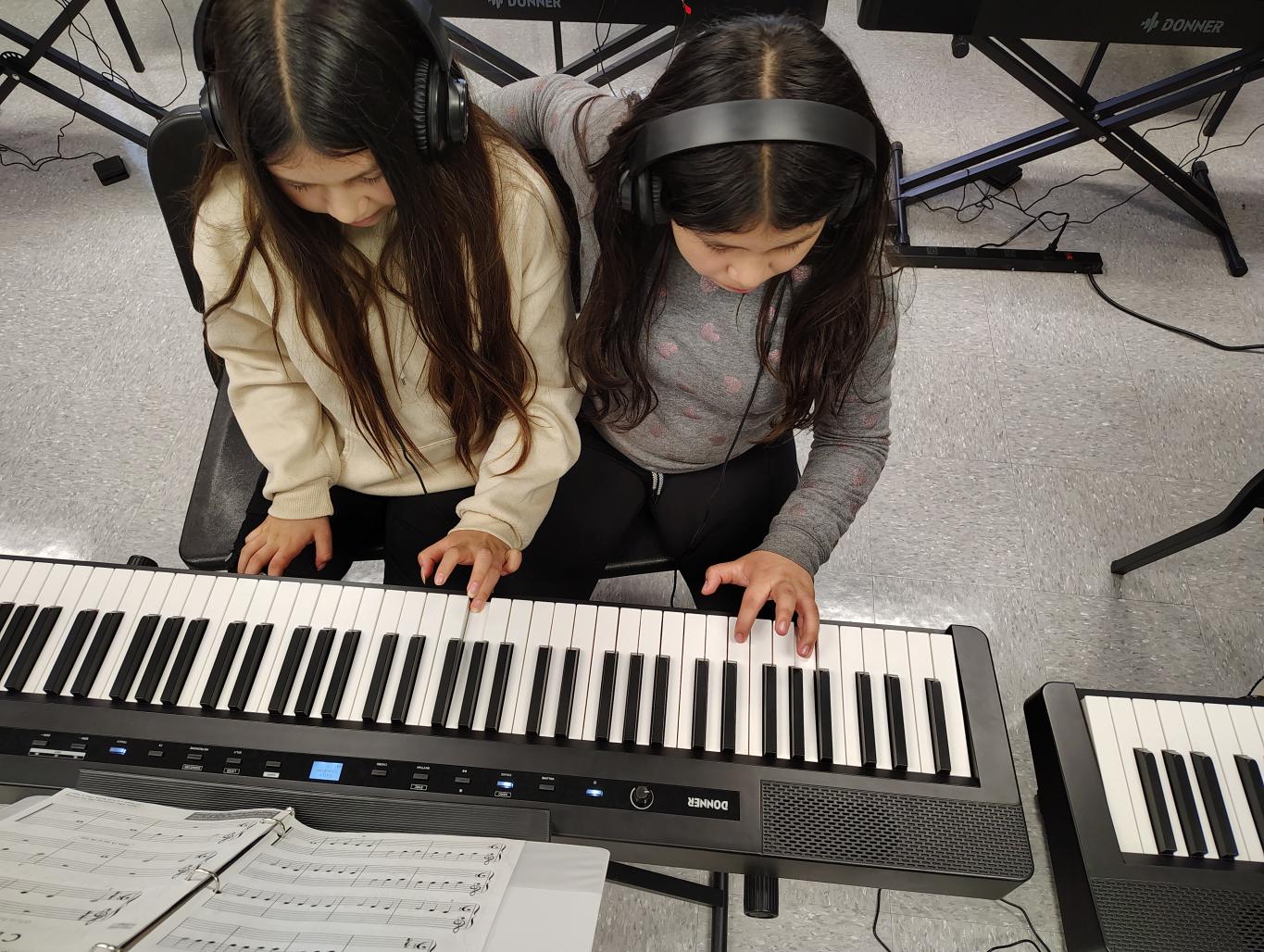
To redress the music education gap in his county, in 2022 Shirley began crescendo!. With the aid of a single grant from Ben Folds’s charitable initiative Keys for Kids (in partnership with the NC Arts Council), Shirley began providing group piano classes for students at two elementary schools. Starting with a preparatory course in basic rhythm and simple singing patterns, crescendo! teaches students to build one fundamental music skill after another via direct instruction. Once the basics are in place, students can then learn notation, finger control, posture, and the workings of the keyboard as a musical system. And by year’s end, the youngsters can read from the grand staff, perform in ensemble, and even improvise and compose.
To hear Mike Kopp (co-founder of Keys for Kids) tell it, Shirley’s group piano instruction arose from necessity. It was not as if Shirley had lifelong dreams of becoming an educator. Rather, he sensed a need in the public schools of his home county and used his unique musical mind to cook up an innovative program. Kopp says that when he and Folds first heard about it, Folds’s “jaw dropped” from both the novelty of Shirley’s method and its obvious utility as a better way to get kids excited about piano than individual private instruction.
And Shirley has been proven right: the program has been successful both with students and parents. It is so successful, in fact, that it is expanding. Now instructing nearly 300 third, fourth, and fifth graders a year, crescendo! has hired classroom assistants to accommodate the increased enrollment and a dedicated lead instructor to work at a third elementary school in the district. What’s more, the program’s staying power has meant that early cohorts of students have, in Shirley’s words, “graduated” and formed a middle-school piano club for themselves and other interested pupils.
Over time, Shirley has been able to “refine, streamline, and integrate” the crescendo! curriculum. What began as an experiment has developed into a tried-and-true music education system. As a result, Keys for Kids recently commissioned Shirley and his team to package their curriculum for use by other Keys for Kids grant recipients, allowing organizations around the state to implement the program in their own schools, counties, and organizations.
As with many artists and arts organizations in western North Carolina, Hurricane Helene hit crescendo! hard. The music room at Old Fort Elementary flooded: “Our keyboards were high enough up on their stands that they weren’t submerged, but the power strips and AC adapters were.” Hazmat crews salvaged the program’s equipment, cleaning off hazardous mud and debris, and then the National Guard transported it to a safe (and dry) location. Old Fort was closed for the rest of the year, and three crescendo! classes were forced to share an auditorium with ad hoc gym classes.
But the exigencies of Hurricane Helene also brought into relief the social benefits of crescendo!. With the help of makeshift stage curtains and headphones, the program persisted and students began noticing the welcome sense of continuity and social cohesion it provided. Many of them had lost their homes, borne the displacement of their family and friends, and gone for extended periods without running water or electricity. In this context, class played a therapeutic role. According to Shirley, “Piano class meant students were able to pick up practicing where they had left off, improvising served as an outlet for their thoughts and emotions, and the calm allowed them to focus their minds.” Such mediative effects in turn allowed students to reconnect with one another. Using headphone splitters, they collaborated on duets and communed in the process. In this way, Helene helped Shirley refine the program, allowing him to generate a new, productive module on improvised duets.
The program is in its fourth year of operation, and Shirley looks to the future with hope and excitement. The “nervous optimism” of early years, he says, has given way to “confident optimism” as the program grows, deftly juggling complex scheduling, funding, and staffing priorities. We imagine that such confidence, based on the experience that comes from a do-it-yourself spirit, is akin to what students learn on and off the keys in crescendo!.