

North Carolina’s arts and culture ecosystem is vibrant and strong, thanks in part to grants that support nonprofit arts organizations across the state. The North Carolina Arts Council is one of the oldest statewide arts councils in the country, boasting partners in all 100 counties. We’re here to support and elevate the arts and arts education across the state, to benefit the cultures and communities of North Carolina. Grants are one of the tools we use to support the arts, so we want to shed light on how they work and the staff who guide applications through the process.
Each year, the Arts Council receives money from both the state and the federal government that we distribute through grants. Generally, these grants support nonprofit organizations that provide strong arts programming for the benefit of audiences and participants. To encourage public/private partnerships, the Arts Council requires most grantees to match grant amounts with money from other public or private sources, increasing a funded program’s impact. In a typical year, we provide more than 300 direct grants throughout the state.
Although we award most grants to organizations, we also offer two special grant categories— North Carolina Heritage Awards and Folklife Apprenticeships—and these honor and support people working in traditional arts.
The annual grant cycle begins with publication of guidelines in the fall. The deadline to apply is always the first working day in March. From there, our staff reviews each application for eligibility and completeness. In May, we host several grant panel meetings, at which content specialists and community representatives score each application against the published evaluation criteria. All funding decisions are endorsed by the Arts Council board and then approved by the secretary of the Department of Natural and Cultural Resources. We typically send award notices in early August, after the legislature adopts a state budget, but delays may occur if the budget is late.
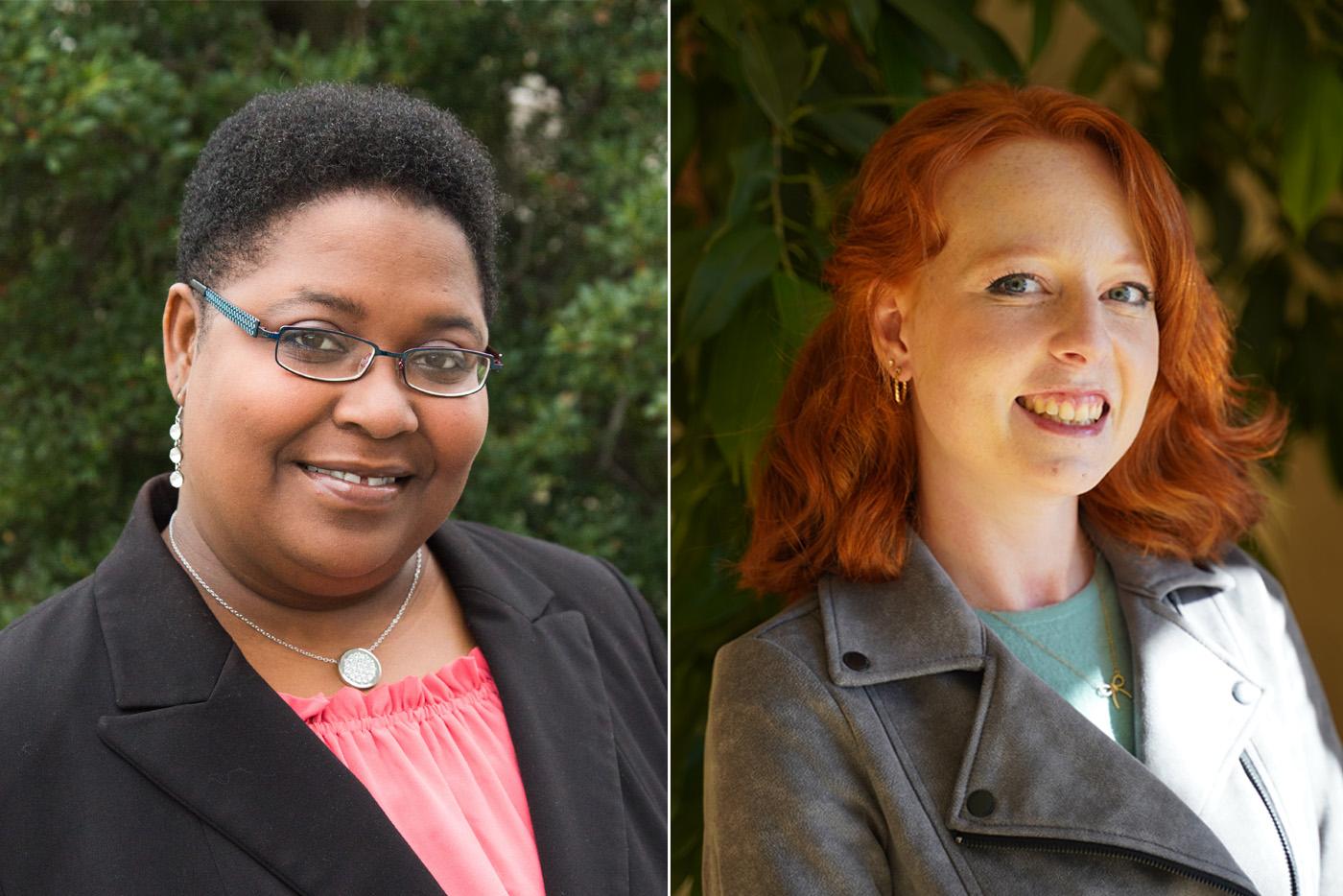
The NCAC’s grants office staff works to keep the grants cycle on track year-round. Tanya McGuire, grant awards and contracts manager, and Mariah Harris, grants reporting and compliance manager, support applicants and grantees by executing contracts, shepherding payments, and processing final reports. We spoke with both, to learn more about their roles at the Arts Council.
What do you do in your position, and what might a typical day look like?
Tanya: I make sure all required paperwork is submitted and is filled out completely with accurate information. I’m responsible for getting grant accounts set up and payments out of the door, and for making sure those payments are fully processed. A typical day would depend on the time of year. Some days consist of a heavy review of documents, communicating with grantees to assist with paperwork, and checking the North Carolina Financial System (NCFS) to confirm grant payments and payment processing. From time to time, I might also respond to an applicant who asks for help entering information in our online portal.
Mariah: As the reporting and compliance manager, I am responsible for due diligence to ensure that we are good stewards of the grant funds we disperse, so I review grantees’ final reports and gather information for state and federal audits. My daily work varies a lot, depending on where we are in our grants cycle, but there is never a boring moment.
What do you find fulfilling about working with grants at the North Carolina Arts Council?
Tanya: The arts give life! They can be freeing and therapeutic. It’s important for the paperwork to be in order, because the funds are provided by our state and federal government, as well as other entities. They believe the arts are important for the health of this world, too.
Mariah: I’m really lucky to spend a lot of time looking at the outcomes of our grants. It’s always encouraging to see the amazing things happening across the state—for people of all ages and in so many different disciplines—all year long. I love that we support such a wide range of unique, local organizations and events in all 100 counties as we strive to achieve our mission of arts for all. It’s an honor to read about and report on the strength of the arts in North Carolina.
What do you think others would find surprising about your job?
Tanya: Our ability to adapt and adjust as needed might be surprising. Anyone who knows about the world of grants knows that things are ever-changing. One must be ready to shift and prioritize upon request.
Mariah: I think they would be surprised to learn just how fun it is. Yes, enforcing deadlines and policies and producing spreadsheet upon spreadsheet require a lot of attention to detail, but I am constantly encouraged by the creative work being done in our state. In addition to collecting the data, I get to see pictures of smiling children attending an arts after-school program and the joyful faces of audience members attending a local theater production. Things like that measure community impact as meaningfully as the numbers do.
What else would you like readers to know?
Tanya: Grants require a lot of attention to detail. Working with grantees requires patience and the ability to communicate clearly about the documents needed. It’s important for everything to be in order, so we can process the payments that allow grantees to bring the arts to North Carolina, one project at a time.
Mariah: We are here to help. We’re excited to get grant funds out and just as excited to hear how the programs and events go. We also love getting to know the creative people behind them.