
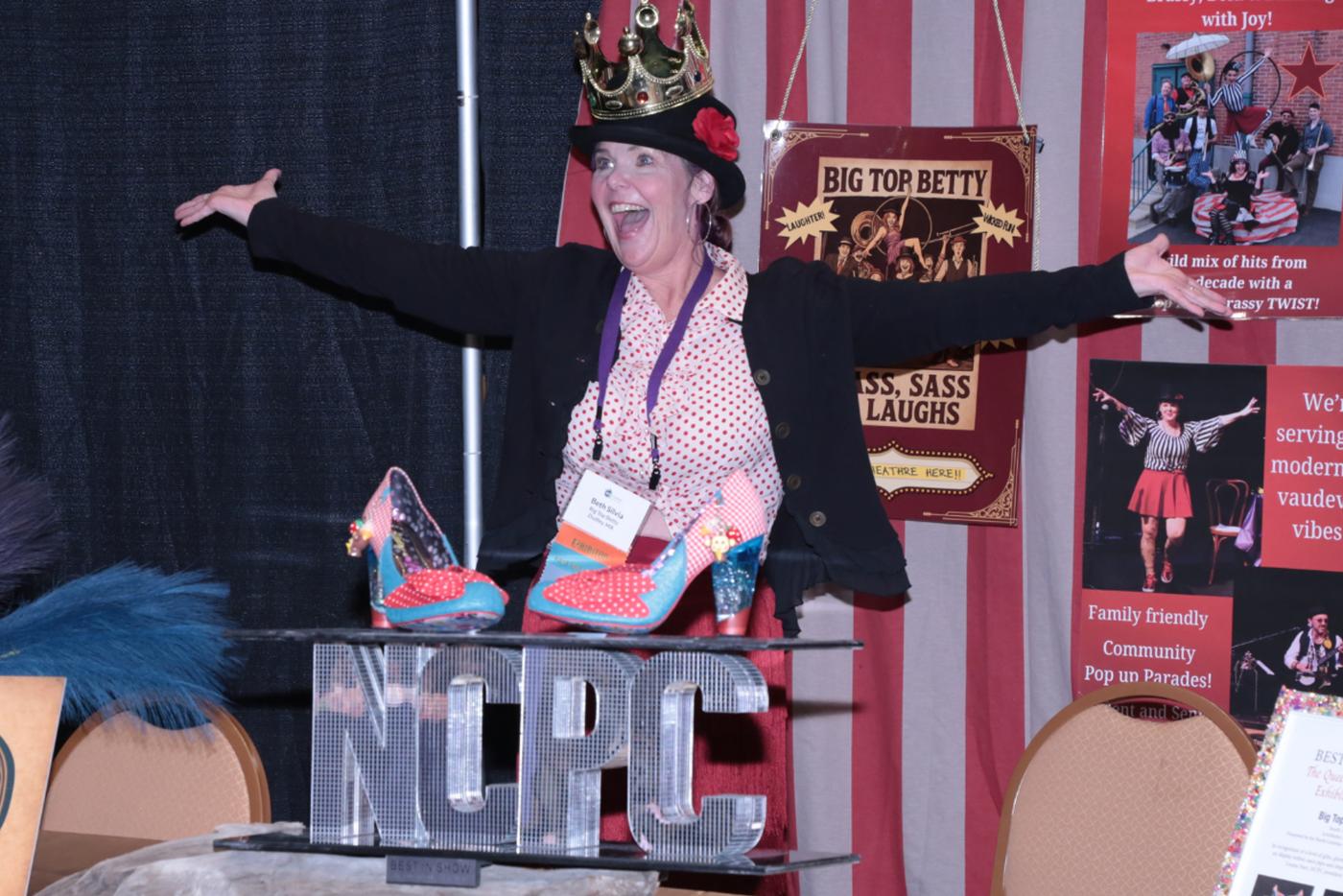
Header image: Exhibitor Big Top Betty at NCPC ArtsMarket Southeast. Photo by Jim Goodwin, courtesy of NCPC.
Thanks to nearly 60 years of investment in nonprofit arts, a strong network of colleges and universities, and a strategic location along the eastern corridor between New York and Miami, North Carolina offers presenters a rare opportunity to bring high-quality entertainment to venues of all sizes throughout the state. In the early 1990s, a group of North Carolina presenters formed the North Carolina Presenters Consortium (NCPC) to harness the industry’s strengths for growth and to encourage more diverse offerings here. Presenters are not typically the creators of a play or performance; instead, they bring live performances to audiences in a venue such as a theater or concert hall. When scheduling performances, venues and artists must come up with a timeline that benefits everyone. Block booking occurs when multiple presenters in a region work together to bring artists to their stages in a way that makes the most of budgets for travel and expenses.
As North Carolina’s population and arts infrastructure have grown, so have the number and variety of opportunities to book high-quality performances statewide. Through NCPC, presenters have turned relationships that could be seen as competition into ones built on collaboration. Block booking has opened doors for smaller theaters to bring diverse entertainment and more established artists to their stages. It has also allowed them to leverage their budgets. As the organization states, “Having grown into a national model for presenting networks, NCPC functions as a noncompetitive alliance of colleagues who trust, support and uplift each other, knowing that building one’s own audience for the performing arts builds our state’s audience for the arts.”
Former NCPC Executive Director Stephen Barefoot agrees. “North Carolina was beginning to grow one of the largest and most active statewide presenting networks in the country,” he says. “We were being looked upon as a prototype in terms of member interconnectivity, communication, and block booking.”
“We are uniquely blessed to have a lot of venues, including colleges, universities, and arts agencies,” Vicki Vitiello, former deputy director of the NC Arts Council, says. “There were many presenting organizations. And, because of our state’s location, halfway between New York and Miami on a touring route, it was practical for performing artists to make a stop here. This made our state fertile ground for presenting in the 90s.”
At that time, larger presenters shopped for talent at major booking conferences in New York or regional hubs. These conferences were expensive and inaccessible for smaller venues, and artists often couldn’t afford to showcase there. NCAC set out to create an experience that gave mid- to small-sized presenters direct access to artists, a clearer understanding of what was available for their stages, and support in improving their work in behalf of their communities.
Vicki, who was the NC Arts Council's touring and presenting director in the 90s, was tasked to create a conference that could serve the smaller theaters in the state, connect them with artists, and provide them networking opportunities. The natural partner for this work with the NCAC was NCPC, because they were already connecting the state's theaters. Vicki, Stephen, and colleagues worked together to build the prototype for the arts market, with a goal to serve the same purpose as the big conferences, with some key differences.
“NCPC and NCAC created ArtsMarket as a tool to provide services to our membership and partners, to enhance communication, and enable ‘name to face’ connection among our larger statewide community of organizations, all working toward the same larger goals,” Stephen says. "The physical size of one’s venue became less important. The fact that we were each attempting to grow our local audiences and realizing that we could help one another rather than compete became a paramount organizational mission and a personal way of viewing our profession. I don’t think we ventured forward looking at it as a problem to be solved. I think we moved forward thinking of this as an opportunity to be of greater service, and to have a manageable conference fee for smaller to midsize presenters. The conference was a mechanism of ‘setting up the aisles,’ which welcomed us to take a stroll, meet each other, and start talking.”
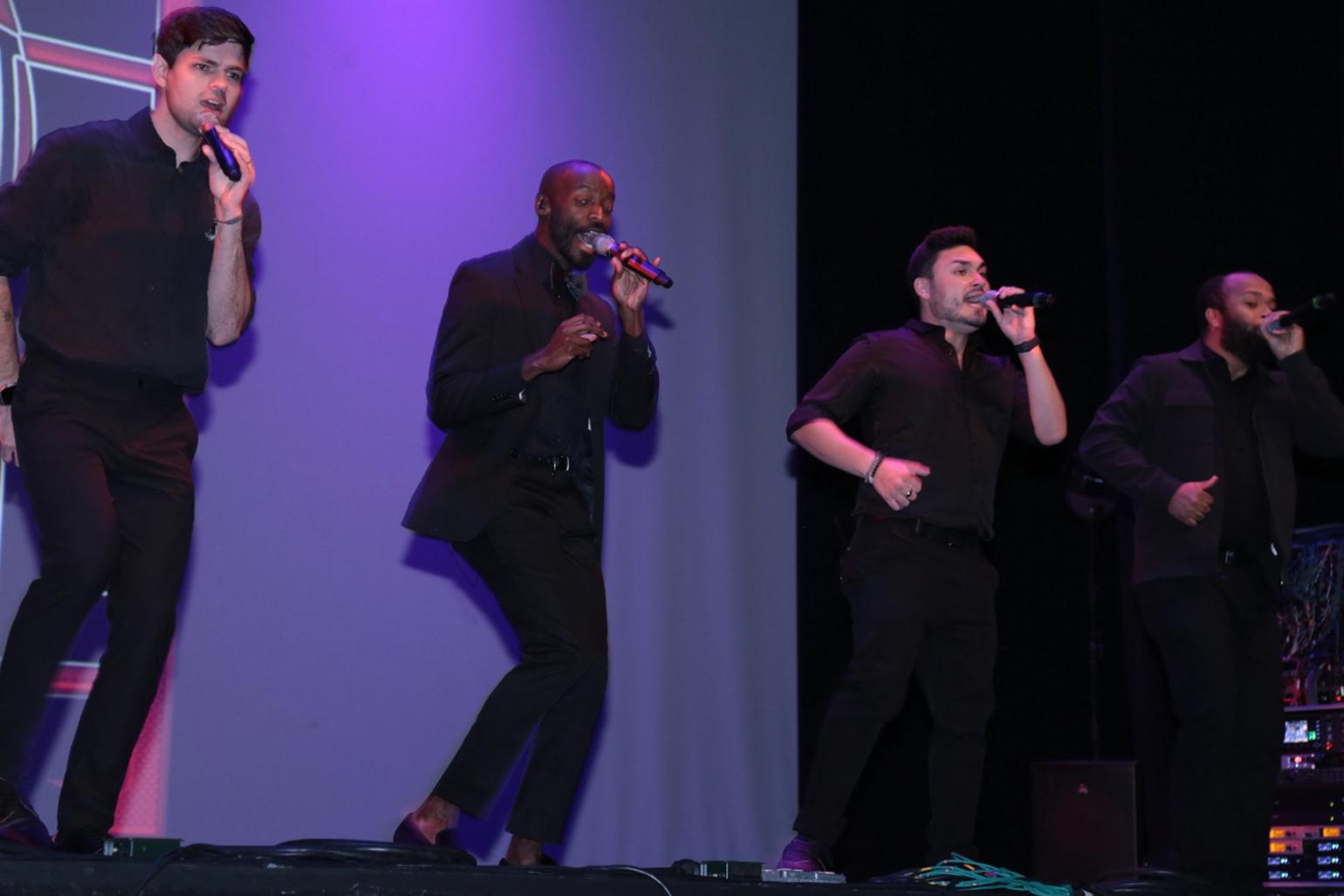
Over the years, the planners have preserved the conference’s original strengths while creating an event that delivers much more than a showcase. Jamie Katz Court, the NC Arts Council's music and dance director and accessibility coordinator, explains, “ArtsMarket Southeast is a conference where people from arts organizations—nonprofit and for-profit presenters, performing artists, agents, and service providers (sound technicians, ticketing companies, and so forth)—can meet, learn from one another, and have a wonderful time doing so. There are juried showcases, during which performing artists share a few songs or an excerpt from a performance, and presenters watch these showcases with an eye to whom they might want to book in their theaters or venues in the future. There’s also the exhibit hall, where the artists, agents, and other exhibitors can meet presenters, make new connections, and book performances for themselves or the artists they represent. It’s a trade show for the performing arts.”
The conference has stood the test of time and is still impactful for the members and artists. Its focus has evolved from North Carolina to the Southeast, but its original character remains. “One thing that makes ArtsMarket unique is that there are no concurrent events: participants don’t have to choose between one session and another,” Jamie says. “The schedule is set up so everyone can attend all of the showcases, all of the networking events, and all of the exhibit hall time. Also, the juried showcases are in a theater—the Carolina Theatre of Durham, to be specific—rather than in conference center ballrooms.”
By making the events nonconcurrent, organizers give artists the opportunity to view how other artists present. This is particularly important for artists who may be new to the field, providing them with experience they can take to other conferences. The conference proudly encourages networking. Jamie says, “In addition to showcases and time in the exhibit hall, there are also times set aside for building connections and community. From the popular ‘Champagne and Charcuterie,’ to dine-arounds, plus after-hours gatherings, there are ample opportunities for participants to have informal conversations and get to know colleagues from around the state and region who might become future collaborators and friends.”
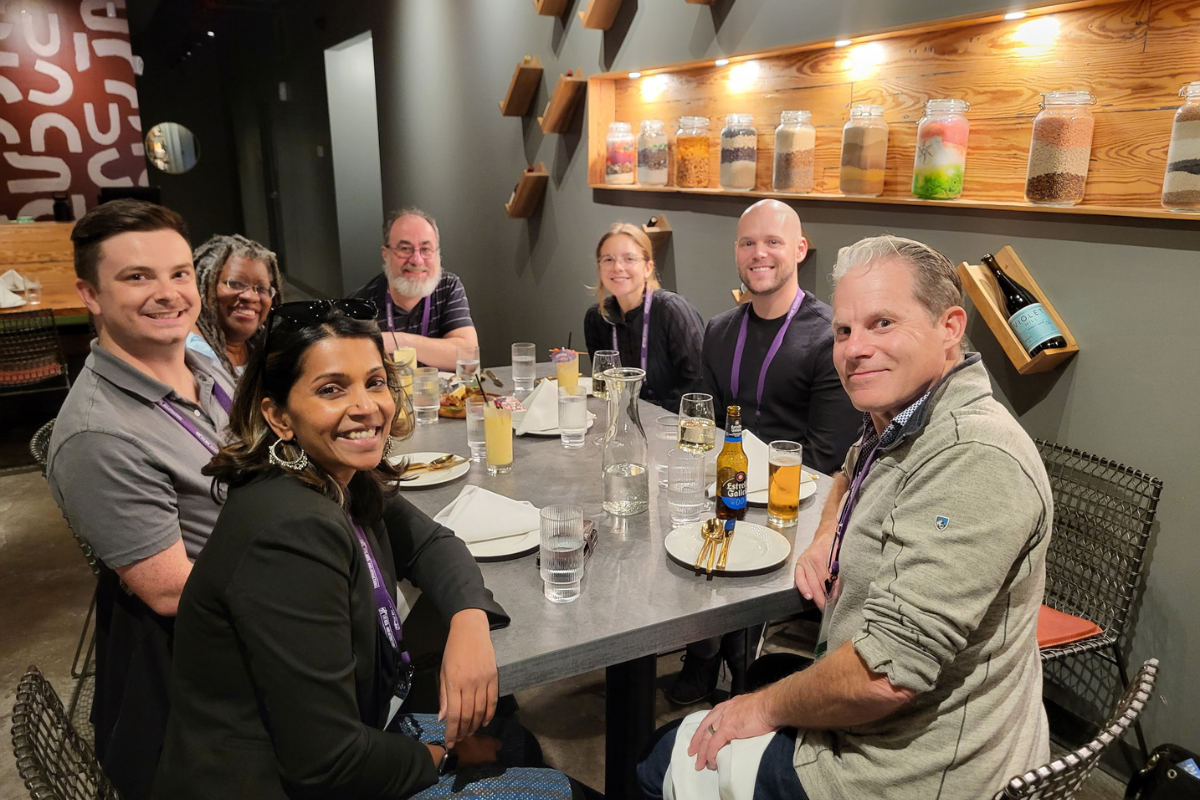
Staging the conference is itself a collaborative effort. The organizing team comprises NCPC staff, contractors, interns, and volunteers from throughout the arts community, and members of NCPC’s board of directors. “From ArtsMarket's founding to the present, the Arts Council has been involved in various capacities in bringing it to life,” Jamie adds.
Relationships that begin at Arts Market can be nurtured throughout the year through other events that NCPC hosts: block booking meetings, virtual affinity-group gatherings, and the Summer Annual Meeting. These, too, are opportunities for people from diverse organizations with similar missions and goals to collaborate, learn with and from one another, and share successes and challenges. “Whether you’re encountering artists who you wouldn’t have met or gotten to see perform otherwise, developing a new partnership or collaboration opportunity, or even simply meeting someone else whose work is similar to yours that you can ask questions or bounce ideas off of when you’re stuck, this is a chance to gather, connect, and share ideas and resources that allow artists, arts programs, and theaters and venues to thrive and bring innovative programs to their audiences throughout North Carolina and beyond,” Jamie added.