
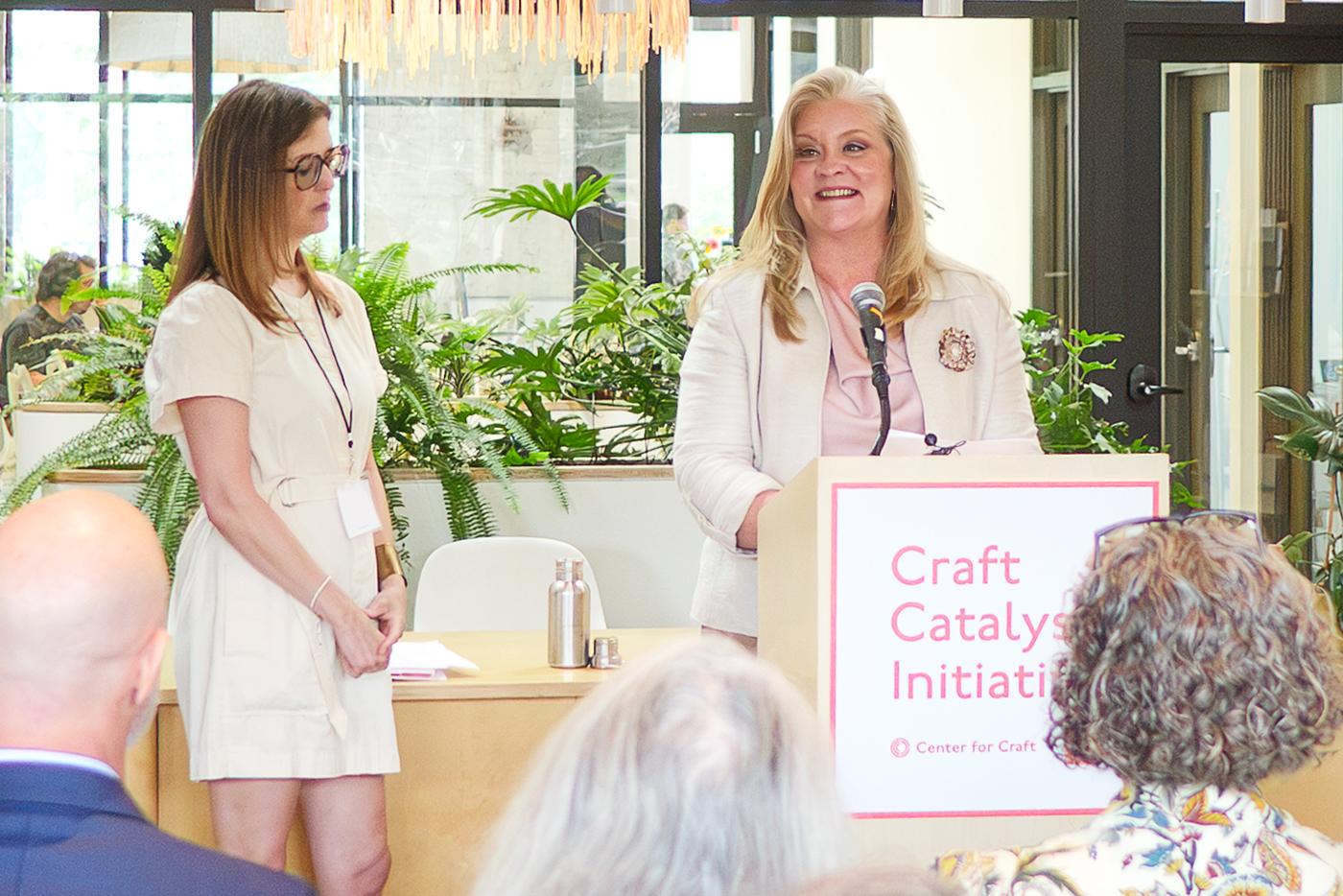
Header image (left to right): Etsy Senior Director of Impact & Sustainability Chelsea Mozen and Center for Craft Executive Director Stephanie Moore. Photo by Ricardo Tejada, Show and Tale Creative, courtesy of Etsy, Inc.
North Carolina remains a beacon for the arts, and new investment in the state’s western region is drawing national attention to a community long celebrated for its creative depth. The Center for Craft and Etsy, Inc., have partnered to strengthen craft hubs nationwide, committing $10 million over the next three years as they recognize the vital role that craft plays in communities, particularly in an artificial intelligence-driven era. At a recent event in Asheville introducing the investment, Josh Silverman, Etsy’s executive chairman, said, “We are living through a period when technology is changing how creative work is made, discovered, and valued. At Etsy, we believe that makes human creativity more important, not less. The more the world changes, the more people seek out objects with meaning, stories, and a human touch.”
Through this partnership, the organizations created the Craft Catalyst Initiative, funded through Etsy’s Uplift Fund, to strengthen the nation’s craft communities. The initiative identifies and supports renowned nonprofit organizations whose mission is to serve makers throughout their careers. In its first round, the initiative will award $2 million across 20 nonprofit organizations that are based in five regional craft hubs. Etsy and the Center for Craft define these hubs as “areas where artisans and cultural organizations intersect to cultivate strong communities through craft.”
Headquartered in Brooklyn, New York, Etsy operates online marketplaces connecting creative entrepreneurs with buyers around the world. Its primary marketplace, Etsy.com, is craft centric and serves millions of craft makers. This isn’t Etsy’s first investment in the Western North Carolina (WNC) region. After Hurricane Helene, Etsy invested in the North Carolina craft community, awarding a $100,000 Community Resilience Grant to help Asheville’s River Arts District. “Etsy was proud to support the River Arts District visioning and planning process after the storm,” Silverman said. “That work reinforced something we hear from makers again and again: creative businesses need more than a marketplace. They need strong local ecosystems. They need access, mentorship, infrastructure, and community. They need trusted partners who can help them adapt, rebuild, and grow.” The focus on craft arts is what makes Etsy and the Center for Craft natural partners in this endeavor to lift and foster growth in craft and maker arts.
Since its founding in 1996, the Asheville-based Center for Craft has “catalyzed the people and practices shaping the future of making by investing in artists, expanding craft scholarship, and supporting material innovation.” Over its 30 years, the center has awarded more than $10 million to artists, organizations, and researchers, and plans to open the Center for Craft Community Library and Archives in 2028. This resource will combine holdings from the American Craft Council with existing collections to become the nation’s leading resource on American craft. “In an increasingly AI-driven and digitized world, human connection through craft is more essential than ever,” Stephanie Moore, the Center for Craft’s executive director, said. “This initiative will fortify craft’s place by investing in the spaces, relationships, and infrastructure that encourage artists, sustain creative careers, and strengthen communities across the country.”
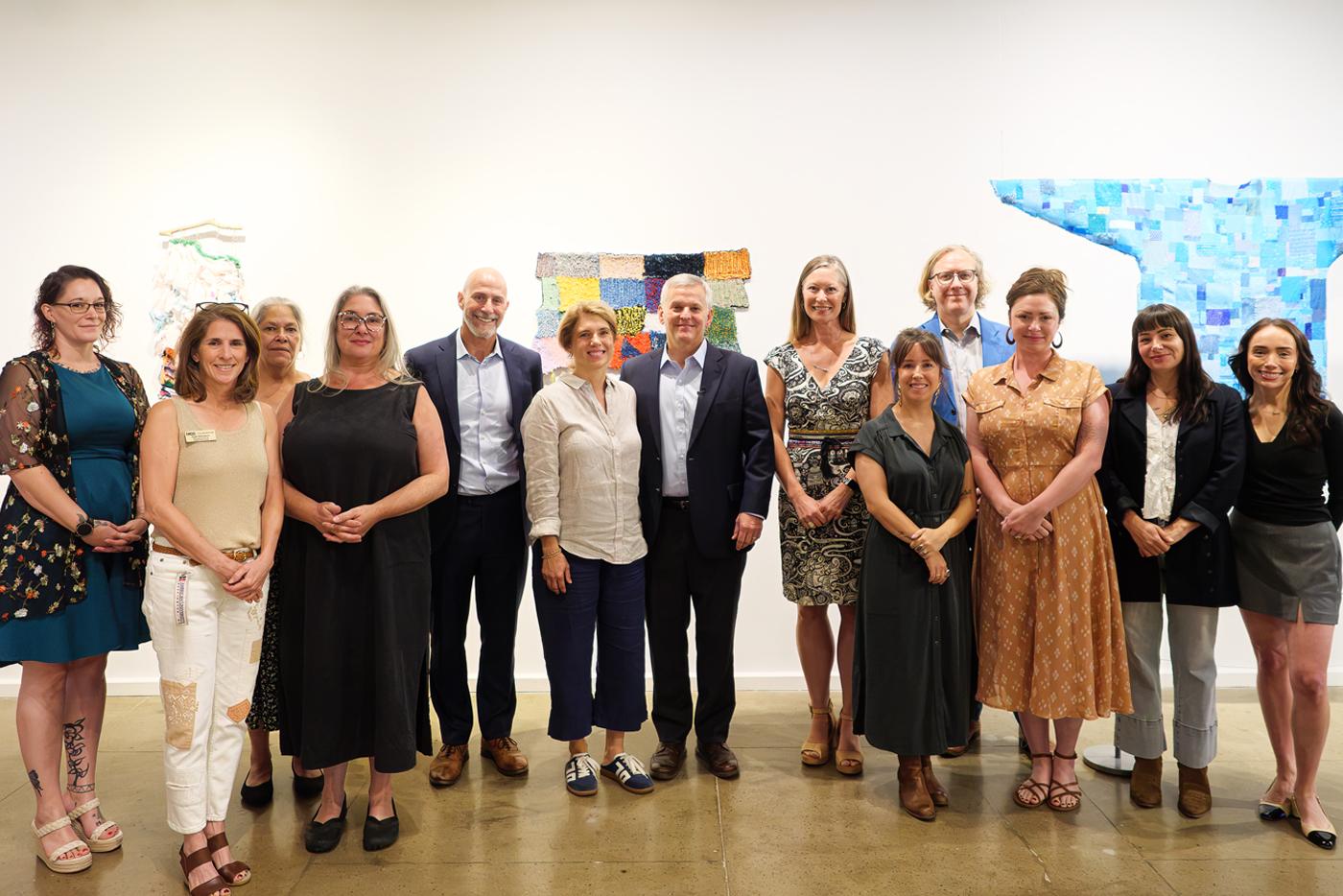
Recognizing craft’s importance to artists, communities, and local economies, the center and Etsy created the initiative to reinforce its long term stability. “These organizations are anchors. They train new makers. They preserve traditions. They provide access to tools, space, education, and opportunity. They connect rural artists to broader audiences. They protect cultural practices that should endure for generations,” Silverman said. “This investment is about supporting their vision and expanding their capacity to do what they already do best. We are living through a period when technology is changing how creative work is made, discovered, and valued. At Etsy, we believe that makes human creativity more important, not less. The more the world changes, the more people seek out objects with meaning, stories, and a human touch.”
The five craft hubs where the initial $2 million investment is focused were identified through research commissioned by Etsy and informed by the Center for Craft’s decades of grant-making experience. They are Asheville/WNC; Berea/eastern Kentucky; greater Philadelphia; Santa Fe/northern New Mexico; and the Bay Area, in California. These communities have longstanding support for craft. Asheville and WNC have an exceptionally high per-capita concentration of craft institutions, with craft visible in daily life and regional branding. The region actively preserves Appalachian craft legacy with organizations that encourage traditional practice and preservation. The craft ecosystem is supported by institutions and a network of peers, mentors, and cultural partners with opportunities for education and growth.
Four nonprofit organizations in each hub will receive $100,000 in unrestricted funds. Organizations were selected based on their public commitment to supporting craft, research and interviews conducted in each hub, and guidance from a distinguished panel of national advisors. “Thriving craft communities are essential to preserving traditions, fostering creativity, and creating opportunity for makers,” said Chelsea Mozen, head of Etsy’s Impact & Sustainability program. In WNC, the funded organizations are Haywood Community College Professional Crafts Programs, in Clyde; North Carolina Glass Center, in Black Mountain; Qualla Arts & Crafts Mutual, Inc., in Cherokee; and Toe River Arts, in Spruce Pine. These organizations will benefit from more than funding. “We’ll also be working with grantees over the next year in a cohort model so that they can learn from one another, and share examples and experience and ideas,” Moore said. Because the grants are unrestricted, each organization can determine the investments that will have the greatest impact on their communities. WNC’s recent challenges following Hurricane Helene have brought organizations closer to the artists they serve, giving them deeper insight into current needs.
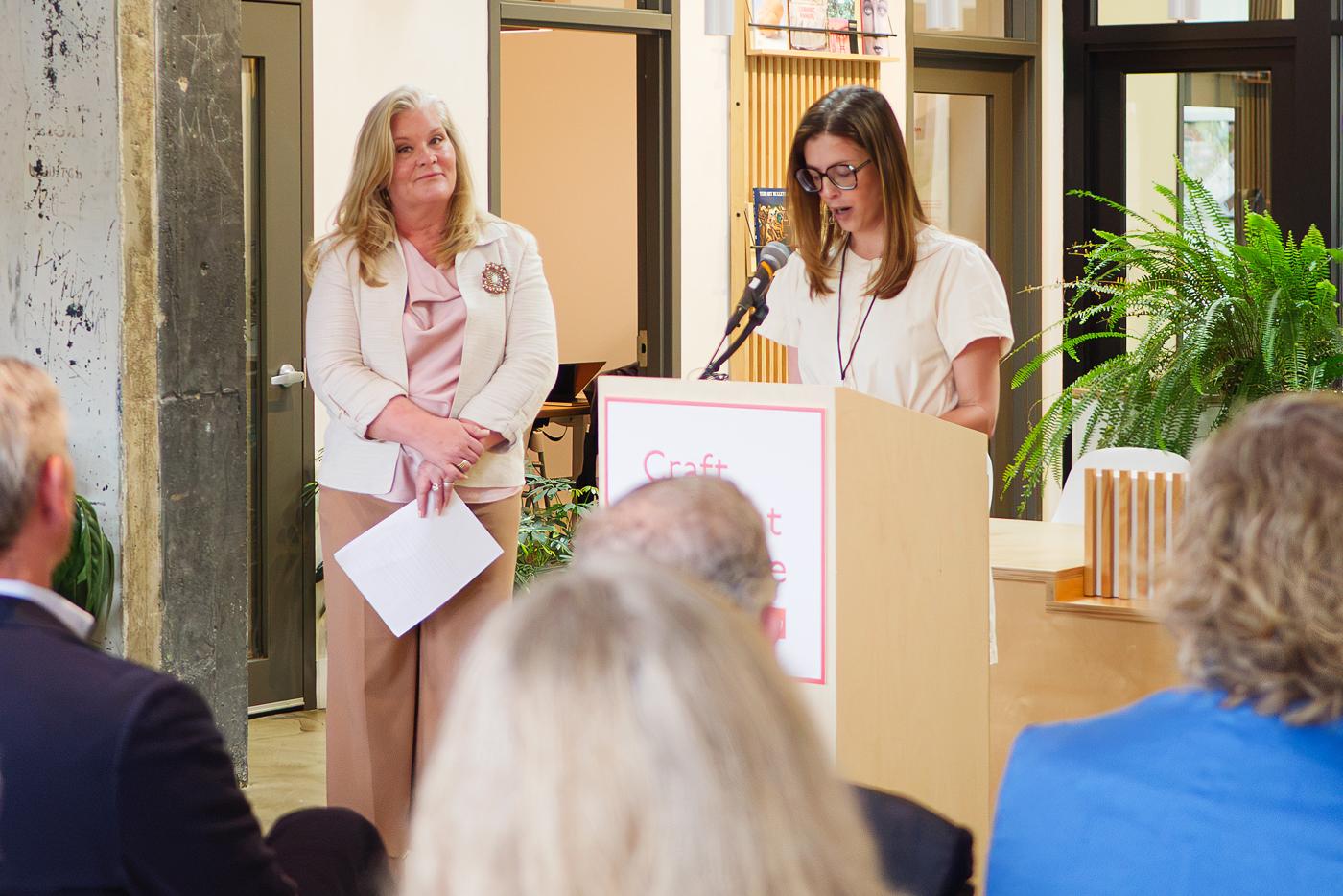
Craft is a noticeable economic driver in WNC for individual artists, arts organizations, and tourism. Etsy—powered by individual sellers, many of whom are crafters—reports that in the United States, 86 percent of their sellers are women, 97 percent operate their businesses from home, and 26 percent live in rural areas. When crafting combines with internet technology, these lean businesses can connect with new buyers and share local craft with national and international audiences. Beyond economics, craft preserves artistic and cultural knowledge, strengthens intergenerational traditions, and fosters small group connection through local organizations that help artists build skills, express identity, and form community. “Behind every artist and craft entrepreneur, there is an ecosystem,” Silverman said. “There are teachers, mentors, cultural traditions, community networks, and places where people can learn from one another. These are the structures that make creative entrepreneurship possible.”
The craft initiative’s support will continue shaping the future of these craft communities as organizations invest in sustainability and growth. As they grow, individual artists will gain opportunities to scale and strengthen their practices and businesses. “Craft reminds us that progress and tradition do not have to be opposites,” Silverman added. “A maker can carry forward knowledge passed down over generations while building a modern business. A local studio can preserve cultural heritage while integrating new cutting edge technologies into their artistic practice. A regional craft community can inspire ideas that travel far beyond its own geography.”