
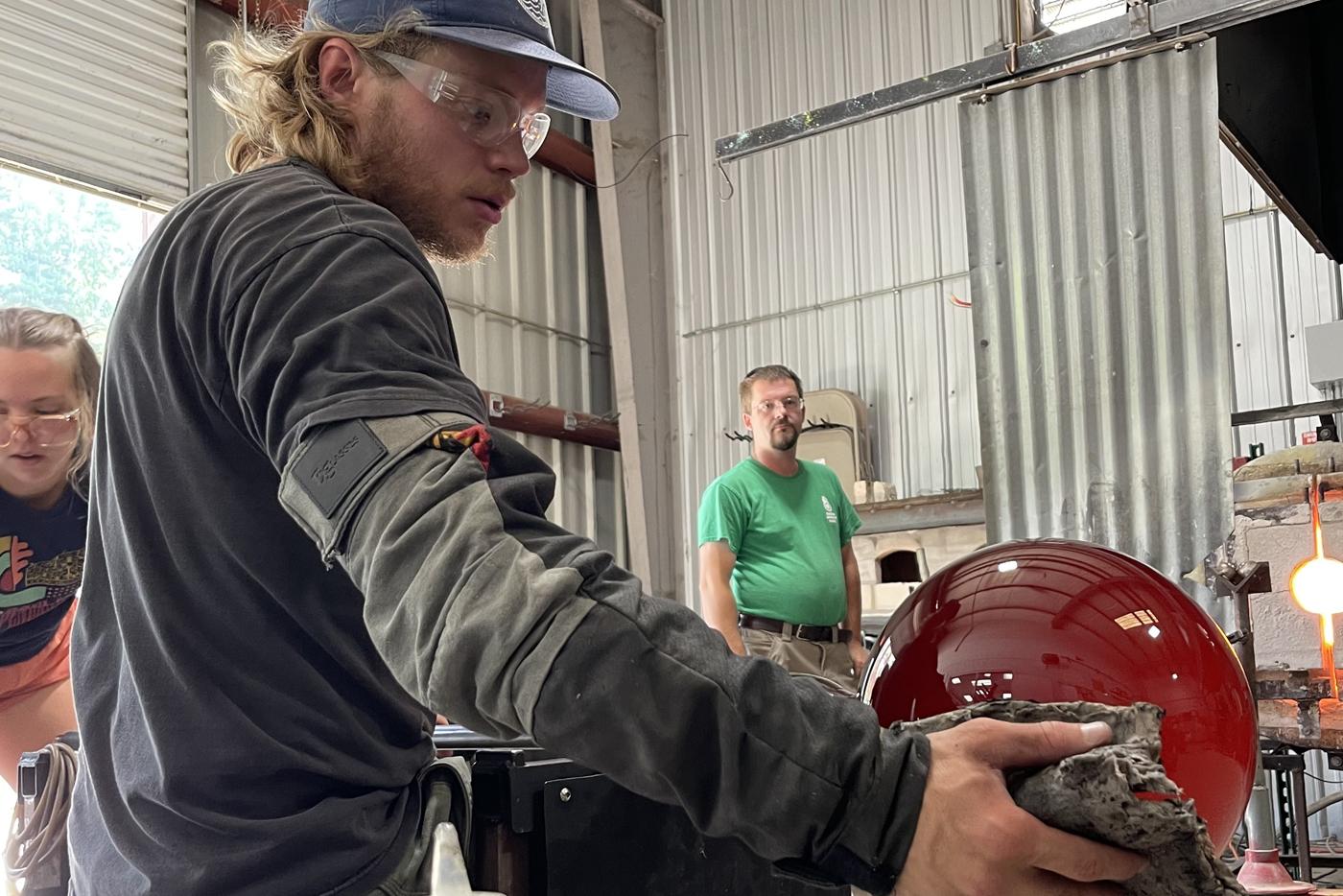
Header image: Glass artist Cole Johnson working at the Dillsboro Creative Arts Center. Photo courtesy of JCGEP/DCAC.
In a landscape of rolling green hills framed by mountains, it’s hard to imagine that trash is decomposing beneath the surface. The Dillsboro Creative Arts Center (DCAC) is the first facility of its kind to capture those gases as fuel for artists working in the fire arts. Founded in 2006 by the Jackson County Government, the Center operates within the Jackson County Green Energy Park. Below the ground lies a gold mine of sorts that underwrites the creativity of local artists creating world-class pottery, glass, and metal art.
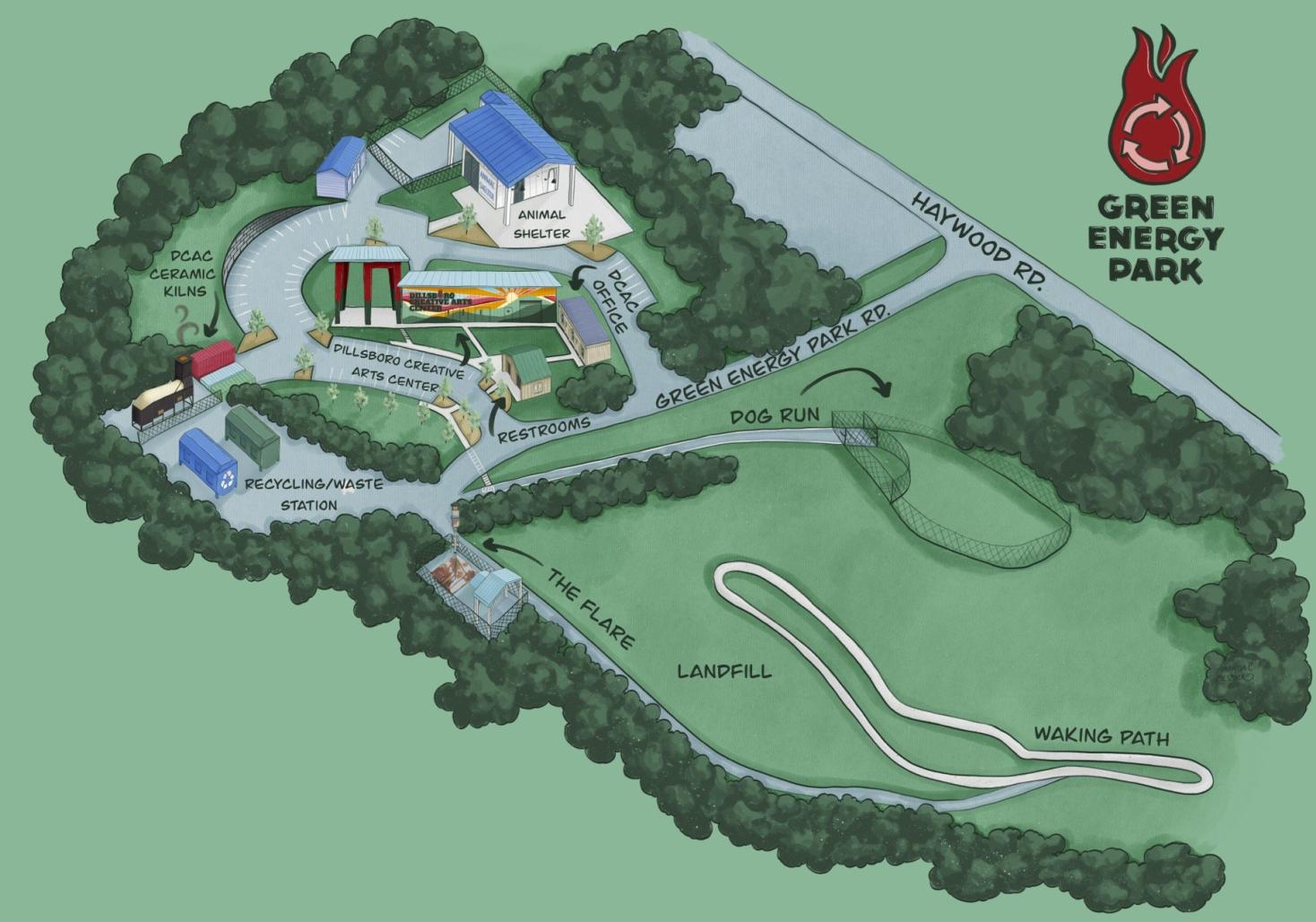
As in all landfills, once a site closes, gases form as organic material decomposes underground. This landfill gas (LFG) typically consists of close to 50 percent methane, close to 50 percent carbon dioxide, and a small amount of non-methane organic compounds. Both methane and carbon dioxide trap heat in the atmosphere over a 100 year period, but methane is at least 28 times more effective than carbon dioxide at doing so.
Instead of allowing the LFG to escape, the Jackson County Green Energy Park (JCGEP) captures the gases and channels them through a series of pipes to the DCAC. There, the fuel supports thermal applications such as the Anagama pottery kiln, based on an ancient Japanese design, and the wood firing kiln used for salt and soda-fired and traditional pottery. The renewable energy likewise powers the center’s glass studio, which supports three specialties: glass blowing, lampworking, and stained glass. The studio is one of the few hot shops in the world that uses landfill gas as a renewable, carbon neutral fuel for heating the glory holes.
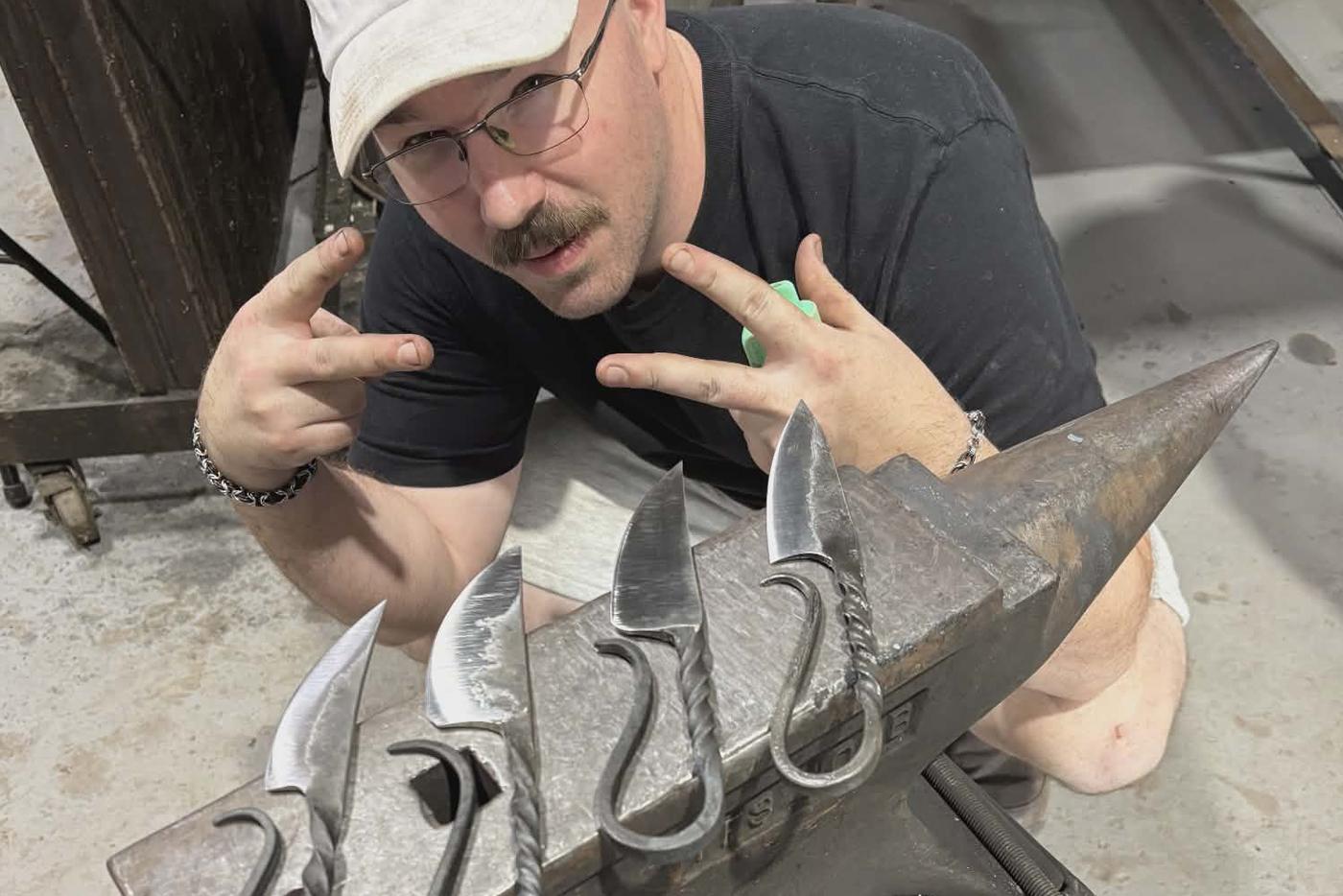
The center also hosts a metal shop, where artists practice blacksmithing, metal fabrication, and metal casting. Gas harvested from the landfill powers the three forges, which can reach temperatures over 2,000 degrees Fahrenheit.
Artist and DCAC Project Manager Julie Boisseau-Craig took on leadership this year but has a long history with the center. “I have been involved in one way or another since the beginning of the JCGEP. While in college at Western Carolina University (WCU), I was introduced to the center through my friend Tracy Kirchmann, who came to graduate school at WCU to help build the glass studio at the park for her thesis. I had an opportunity to help her with that project, and in 2010, I took a class at the park through WCU. Since that time, I have been involved with the park, teaching classes and participating in almost all of the Youth Arts Festivals held each September. Becoming the park's project manager this past April feels like I have come full circle.”
The concept of the park is unique and groundbreaking for fueling fire arts. Former Jackson County Green Energy Park Director Timm Muth was the force behind the vision. After a 20 year career as a nuclear scientist, Muth planned to retire. When he was asked by the county manager at the time, Ken Westmoreland, to help explore ways to use the landfill gas, he saw a challenge and an opportunity. He used his engineering knowledge to use the byproducts typically wasted at most landfills. Although there were doubts that the gases would get hot enough or that they would last, they are still going strong 20 years later. Timm stayed with the project from those early concepts in 2005 until he retired, in 2023. “I credit Timm, who was the original project manager, for our success,” Julie says. “His brilliance at figuring things out, along with Kevin McNiff, our maintenance technician, has kept this park in working order.”
A ceramicist, McNiff has been involved in the JCGEP and DCAC since 2012, when he used the center for wood firing prior to entering WCU’s master of fine arts program. At WCU, he volunteered at the JCGEP as a liaison for wood firing and doing maintenance. After he graduated, JCGEP hired him to be the studio technician and maintenance lead. “This role is the lead for maintaining the equipment in the metal and glass studio, the kilns, and the gas extraction system through which we draw methane from the old municipal landfill for use in the furnaces in the glass shop and the forges in the metal shop,” he explained. “The best part about my job at the JCGEP/DCAC is the wide array of problem solving and systems involved in my work. I get to interact with artists and problem solve different material processes, as well as aesthetic challenges for multiple media and materials. There are technical demands of maintaining the multitude of different systems.”
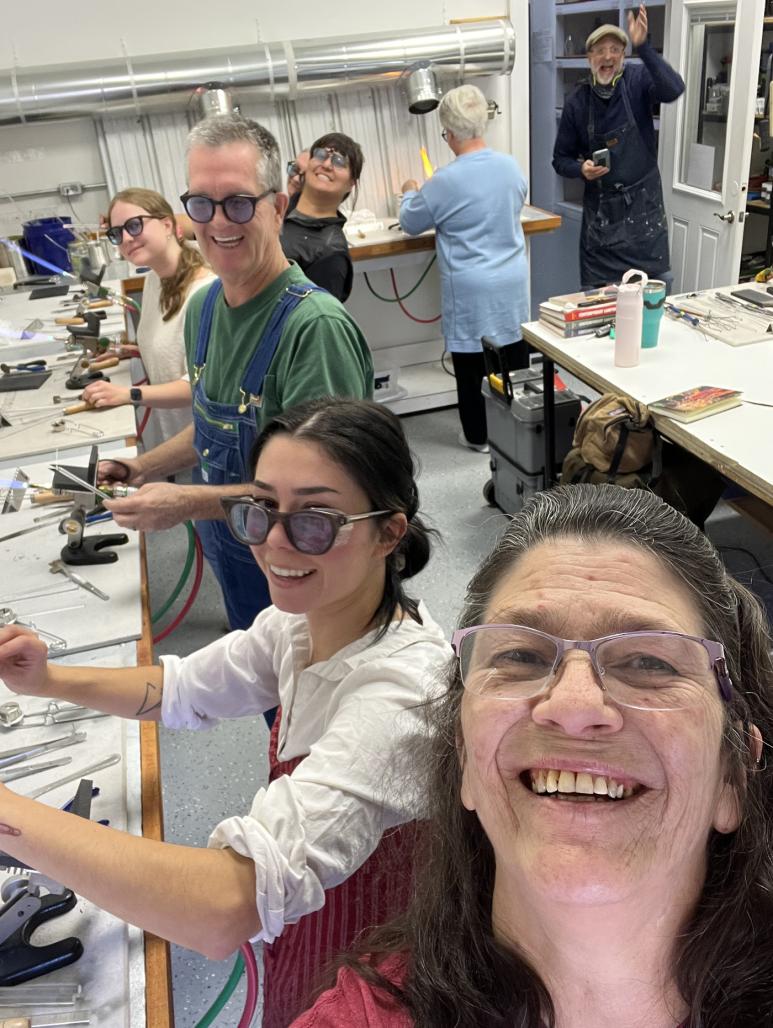
The center is special not only as a beacon for renewable energy but also because of the artists who call it their creative home. They produce truly beautiful work and generously share their knowledge and talent with the community. Several artists are regular renters, using the studios available for ceramics kilns, glass production, and metal work. They also have an indoor lab, which serves as a multi genre instructional space, and mobile glass blowing and blacksmithing units, which are available for demonstrations in the community. “The mobile units are used in local community events as well as at schools for educational and outreach purposes,” explained Kevin. “We routinely take the units to Smoky Mountain High School, Summit Charter School, and Swain County Middle School. We also take them to The Bascom’s community day, to downtown Dillsboro for multiple events, and to others that meet the goals of increasing interest in the project and educating the community in the arts and environmental stewardship.”
Beyond a center for the artists, the DCAC provides arts programming, community engagement, and grant management that fuel the arts in the region as a North Carolina Arts Council Grassroots Arts Partner. A highlight of the center’s programming happens on the third Saturday of September, when they host their annual Youth Arts Festival. This festival encourages the young to experience art through hands on activities alongside talented regional artists and makers.
“I have always had big dreams for this place, as it is important to me both personally and professionally,” Julie says. “I have started the Makers' Club—a weekly community gathering space to learn new techniques, meet new people, and share this great place with the community. This past year, I was tasked with starting the first annual Glass Arts Festival in Dillsboro. It was a huge success, and we have plans for it to grow. In addition, we added a Youth Arts Camp this summer, and it was extremely successful. My hope is to see eventually the addition of a ceramics building and a woodworking facility. We are beginning to offer more classes with visiting artists, whose names alone bring excitement.”
With so much growth and interesting new projects on the horizon, the DCAC is offering a lot to the surrounding community and to visitors. “The main thing I hope to see in the next 10 years is for this place to become an arts destination,” Julie says. “That helps the park, the community, and the state. We have a lot to share in these mountains, and the Jackson County Green Energy Park/Dillsboro Creative Arts Center should be near the top of the list.”
The road to building this center wasn’t easy, but through it, a map for others has been created. “Just because an idea is daunting does not mean you should not attempt it,” Kevin says. “We have a resource that is available to us because the old municipal landfill had a methane migration issue. Through community input, it was decided that we wanted to use that resource to incubate the arts in our area. This community involvement and support, as well as Timm Muth’s endless drive and vision to see the project succeed, has made what we do possible.”