
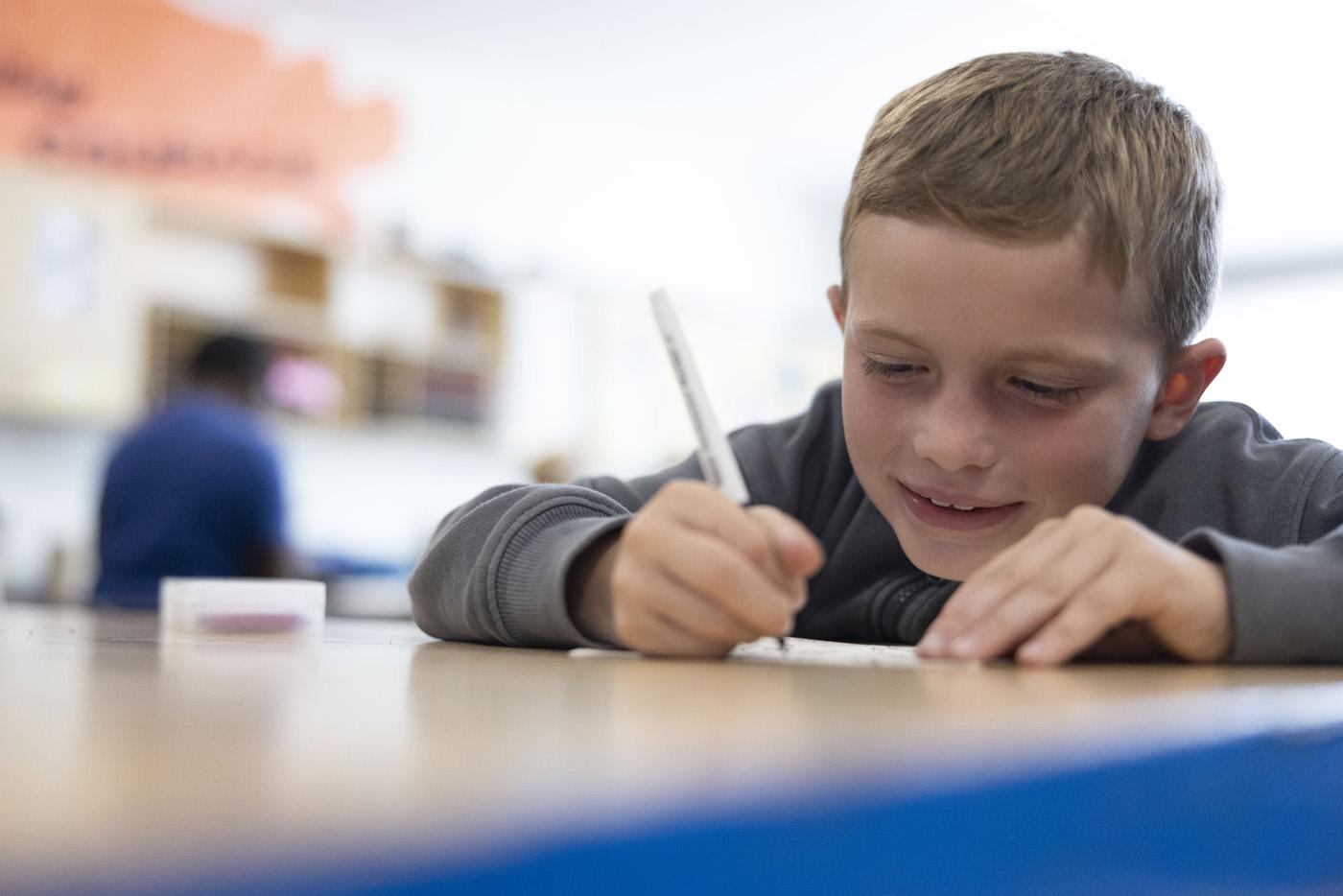
Header image: A student writing at a desk. Photo by Tibor Nemeth, courtesy of NC Arts Council.
Literacy, storytelling, and art are intertwined disciplines that communicate our deepest emotions and help us find common ground. In education, arts integration takes many forms—visual art, music, drama, or literary arts, such as creative writing. The teaching artist Melissa Rooney exemplifies this approach in her writing workshops for schools, where she uses storytelling to spark imagination, strengthen literacy, and help students build confidence in their creative identities.
A woman in science and the arts, Melissa holds a bachelor of science degree in chemistry and a bachelor of arts degree in English from the College of William and Mary, as well as a doctorate in chemistry from the University of North Carolina at Chapel Hill. From 1999 to 2002, she held a fellowship from the Australian Research Council to teach and conduct research at Monash University, in Melbourne, Australia.
Since returning to the United States, Melissa has channeled her scientific expertise and passion for writing into children’s books and school-based writing workshops. She understands how storytelling elements can bring scientific principles to life for students. Drawing on her knowledge both of writing and science, she teaches students to tap into their imaginations, create stories, and communicate the interests that inspire them. Recently, she held a workshop at Brogden Middle School, in Durham, with the support of an artist in residency grant through the North Carolina Arts Council.
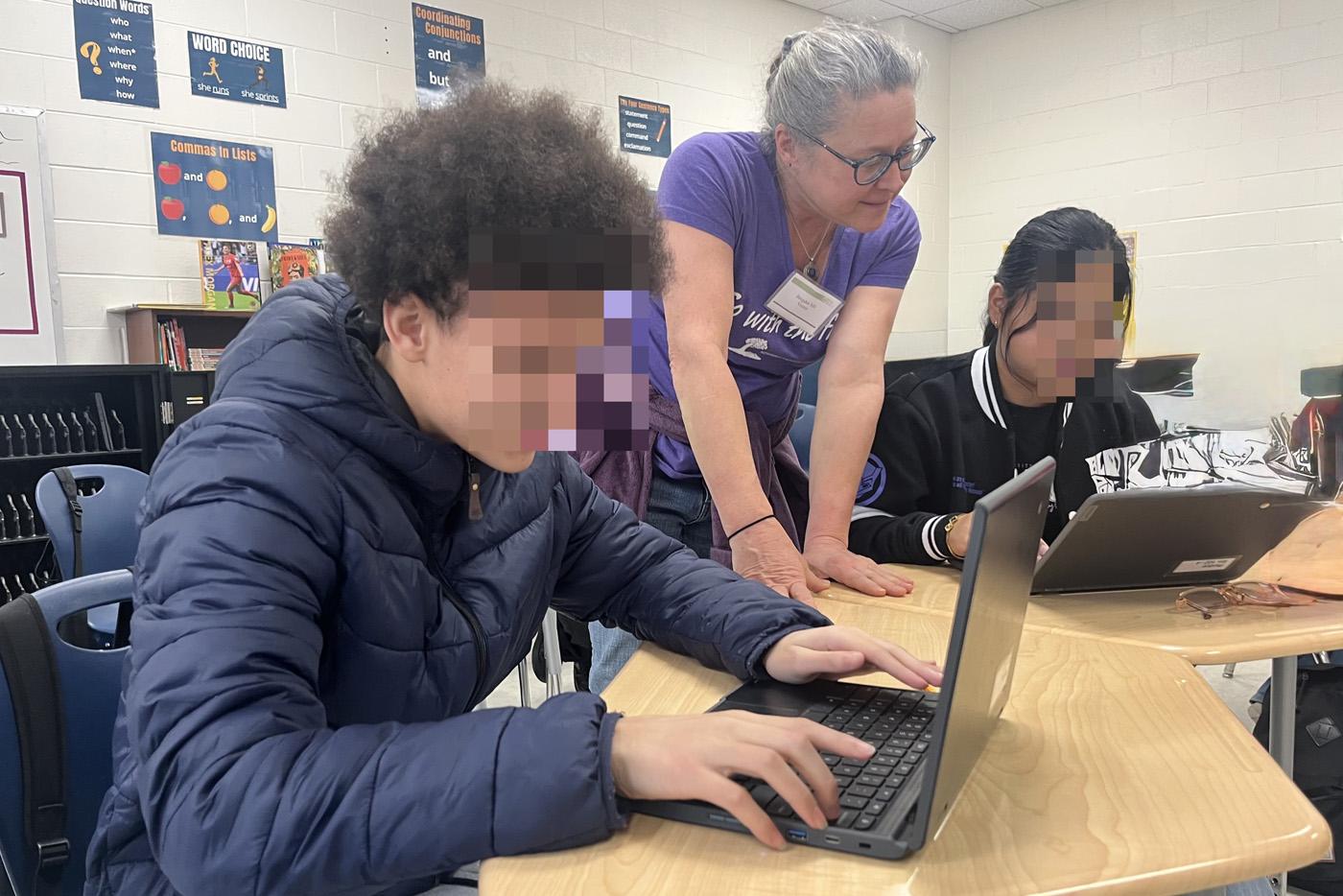
“Many of the students don’t write anything the first day. Some don’t know what to write, some certainly think they ‘can’t’ write, and some just don’t want to participate at all,” Melissa explains. “I tell them that they’ve been making up stories since they started talking, and instruct them to write down the words they would use if they were telling a story to a friend out loud. Once they get that first sentence down on paper and we contemplate where it could go, most students are hooked. The writing becomes easier as each new sentence opens more possibilities.”
As Melissa works with each student, she encourages them and provides feedback, prioritizing those who have nothing on their page. “With each author’s permission, I read stories out loud for peer feedback, and students go from being embarrassed to being proud when they hear their own words spoken aloud and see their fellow students’ encouraging reactions. After the first story, other students beg me to read theirs, too.”
She compiles the results of each workshop into a published anthology, and distributing printed copies to all contributors is an essential part of her program. “It is the rare student whose face does not light up when they see their story in professional font in a printed book, acknowledging that their contribution and experiences are deserving of such attention. I encourage them to get their books signed by the other author contributors, which amplifies their pride and connections, and most are already reading their fellow students’ stories before they leave the release party. Community building through writing fills my soul.”
Experiences like this help students build pride in their creativity and hard work, as they strengthen connections that carry into future learning. Literacy and visual arts are similar in that they both create meaning through signs and forms, allowing students to express and explore complex ideas. These activities engage different regions of the brain—visual, auditory, and linguistic. Storytelling through literary, visual, or theatrical arts builds emotional connections and deepens understanding, offering social and emotional learning opportunities. Ultimately, literacy builds skills that students will use for a lifetime, including creative problem-solving, critical thinking, empathy, and collaboration.
The connections, confidence, and creativity that students experience in Melissa’s workshops reflect the outcomes that arts integration is designed to nurture. Similar benefits can be achieved through many forms of artistic engagement.
Here are a few practical ways teachers can bring those opportunities into their own classrooms:
- Engagement of a teaching artist for your school: Reach out to your local arts agency to see what programs are available to fund an artist residency.
- Arts-centered instruction: Explore literature through visual art projects, music, and drama to deepen connections.
- Visual art and music as storytelling prompts: Use photography, music, and fine art visuals as springboards for creativity.
- Multiple sensory approach: Use music to explore rhythm, rhyme, and repetition found in songs and literature, and discuss how they create meaning.
- Community and cultural relevance: Connect texts to local art, traditions, and media to make learning culturally meaningful.