

Header image: A teacher at Royal Oaks School of the Arts speaking to students, photo by Tibor Nemeth, courtesy of NC Arts Council
For three decades, A+ Schools of North Carolina has reshaped classrooms across the state, bringing energy, excitement, and creativity into new schools each year. Schools considering the A+ model face a path that is intentional, reflective, and deeply rooted in whole-school transformation. And for those that choose to take it, the results for students and staff are life-changing.
Teachers report that students come to school happy and excited to participate because lessons give students many ways to learn and help them find the approach that fits them best. “Since adopting the A+ model, I’ve seen students begin to believe in themselves as academic scholars,” says Amy-Lyn Foster, A+ Coordinator at Royal Oaks School of the Arts, in Kannapolis. “They are using creativity to problem-solve and are working more collaboratively with their classmates. Because of the increase in collaboration, students are learning to see the value in the input of others around them. Socially and emotionally, I’ve noticed a real increase in confidence—especially from students who were once hesitant to speak up in class.”

Although evidence shows that the A+ Schools model supports high achievement and positive school experiences for teachers and students, joining the network is a significant decision. When schools consider moving to the A+ model, they thoughtfully evaluate the decision along the way.
New schools are accepted into the network each year. For interested schools, the first step is all about becoming familiar with the model and the path to transformation. “Schools who have expressed interest in becoming A+ are given a number of opportunities to learn about the network and understand the commitment,” Lori Cozzi, North Carolina Arts Council senior program director for arts learning, says. “Additionally, we have loads of resources on our website that we ask them to review.”
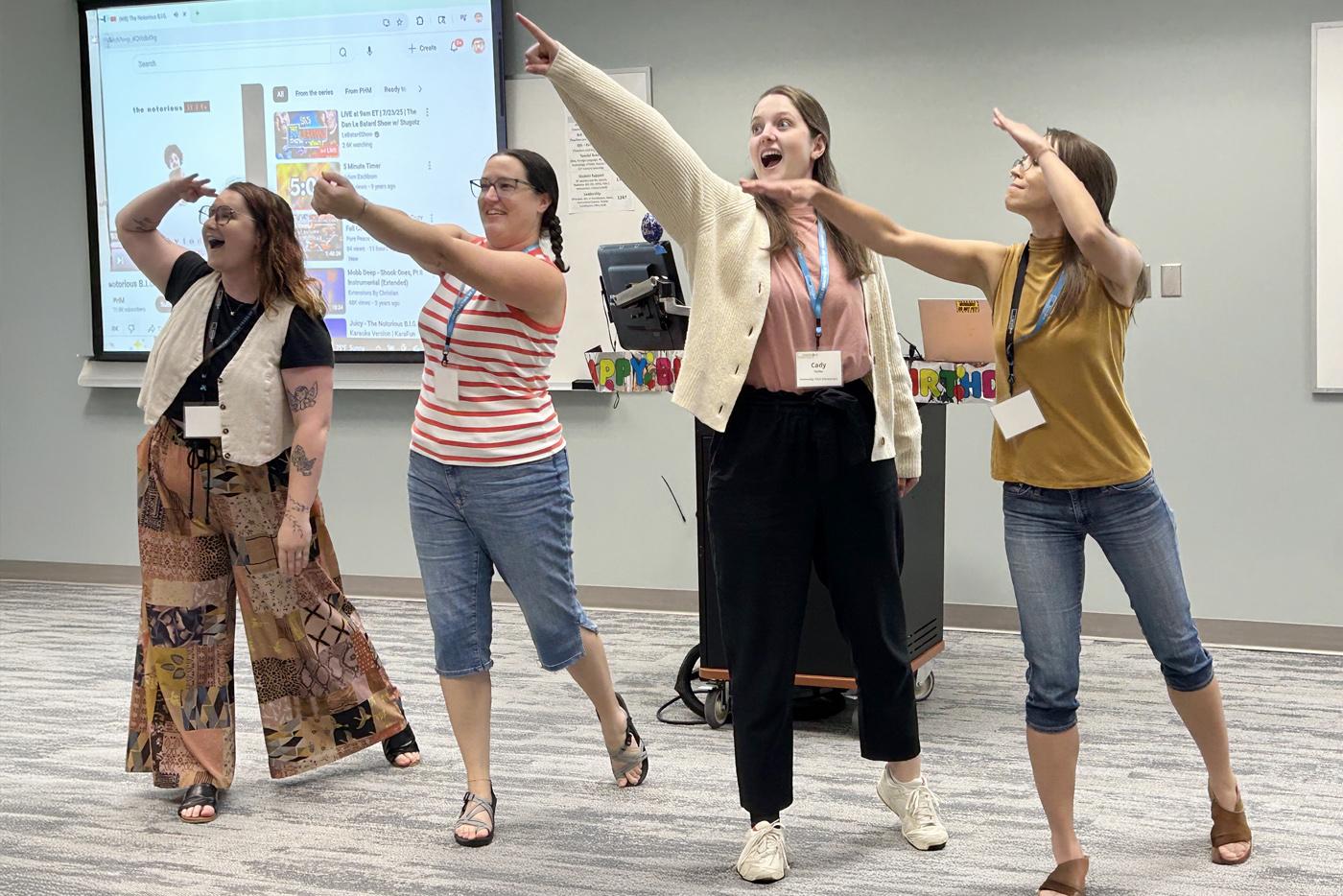
Each interested school is encouraged to send up to three leaders to observe for a day or two at an A+ summer conference. This is a great opportunity to meet A+ staff and Fellows. There, interested school leaders can see professional development in action and observe how teachers from A+ schools learn innovative ways to incorporate the arts in every class.
In the fall, schools will be asked to attend a mandatory pre-application meeting for school leaders. This meeting provides deeper information about A+ processes and gives leaders dedicated time to ask questions of A+ staff and Fellows.
Prepared with detailed information and firsthand experience of A+ professional development, leaders from an interested school will now share information about the A+ model with their faculty and staff to review. Then, the school leaders will survey the faculty and staff to measure their commitment. To move forward, at least 85 percent of the faculty must commit to the transformation to an A+ school. It’s a big decision that occasionally raises concerns about the change. Lori says, “Principals can sometimes overcome hurdles by allowing their colleagues to observe in A+ schools, attend A+ professional development, and talk to teachers in other current A+ schools.”

Through the years, this high level of commitment has proven to create a strong foundation for schools entering the network. This commitment, combined with steady support from A+ staff throughout the process, sets schools up for success. Schools that meet the 85 percent buy-in threshold may apply in the late fall. The following spring, accepted schools begin the transformation when school leaders attend their first professional development at the A+ Leadership meetings and then visit several established A+ schools.
In the summer, the entire staff attend the five-day A+ training summer institute. This opportunity to meet and network with other schools and learn from the A+ Fellows is invaluable. This is where the seeds of teacher collaboration begin to grow. “Every time I have attended an A+ professional development, I feel rejuvenated,” Ginger Rackley, A+ coordinator at Saluda Elementary in Polk County, says. “It is truly amazing. I am ready to tackle the world when I leave A+ PD. So, I come back to my room with even more determination to integrate the arts in my lessons and work more closely with the enrichment teachers so that we are truly having that arts-integrated collaboration.”
Families experience a new way of thinking about learning, too, but because the curriculum puts data-supported benefits and state standards at the forefront, they usually embrace the change. “The transition to becoming an A+ school is one that families are typically very excited about,” Lori says. “Once the program begins to be implemented, they see their children are more excited about school, they appreciate the program’s emphasis on collaboration, and they love how it supports all students.”