
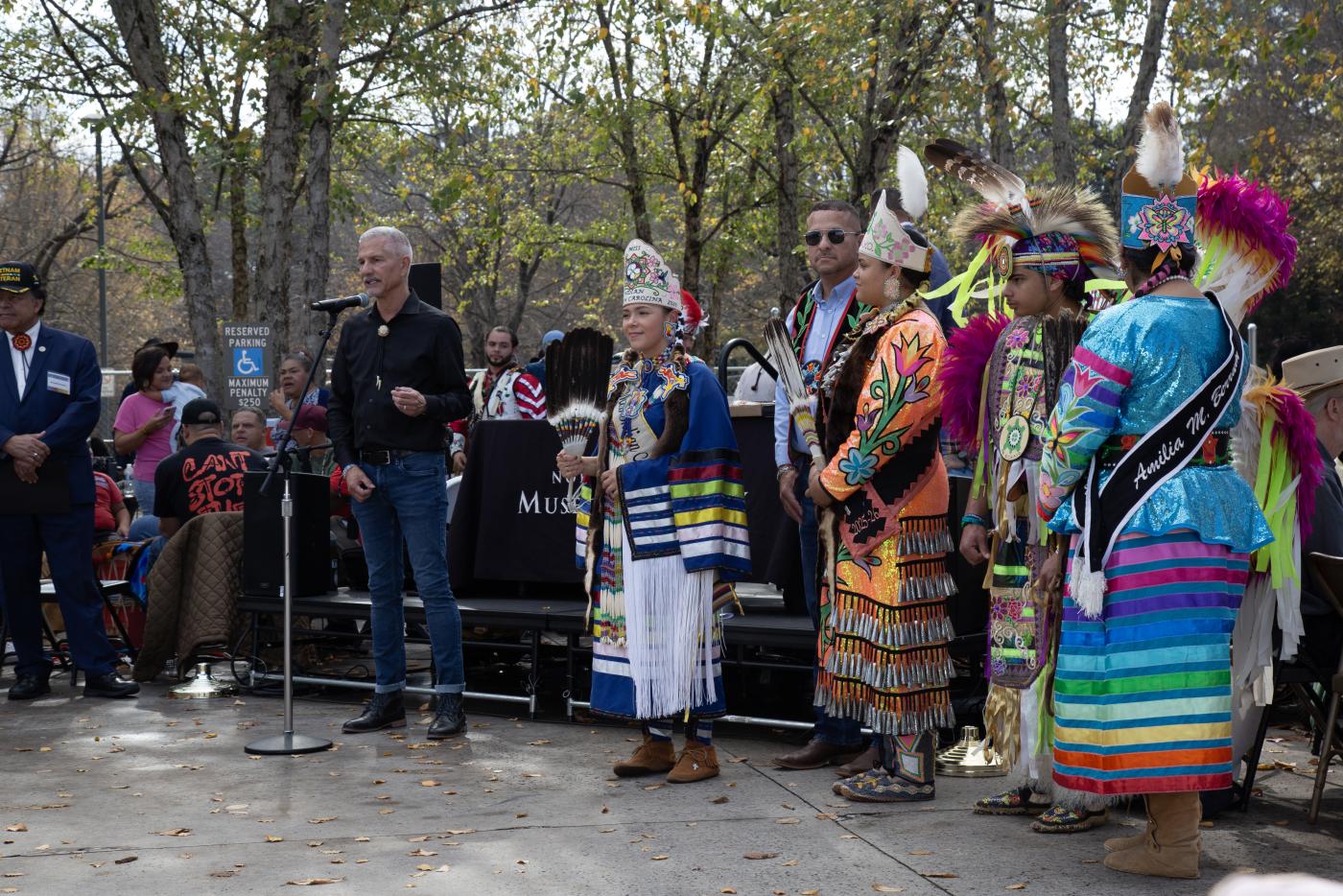
Header image: American Indian Heritage Commission Director Kerry Bird and 2025/26 Miss Indian North Carolina Page Freeman at the American Indian Heritage Celebration on November 22. Photo by Andie Freeman / North Carolina Arts Council
For decades, the North Carolina American Indian Heritage Celebration has stood as a vibrant tribute to the state’s Indigenous communities. Each year, people from across North Carolina gather to honor the rich traditions, stories, and resilience of the state’s eight recognized tribes. This year’s milestone thirtieth Celebration continued that legacy with renewed energy—bringing together families, elders, youth, and visitors to celebrate identity, preserve heritage, and educate others about the depth and diversity of American Indian cultures in North Carolina.
In 1995, the Celebration began as a much smaller event. Recently, Kerry Bird, director of the North Carolina American Indian Heritage Commission, reflected on the origins of the event: “The initial Celebration had its roots in the sharing of food, a shared thanksgiving meal. It was a very humble beginning. But as it grew, more folks became involved, more tribes were invited to participate. Artisans showed their traditional arts and crafts, from beading, basketry, pottery-making, and painting. Drumming and singing, colorful regalia, informative and educational panels, and storytelling were also added. It has grown into a festival we can all be proud of, changing and evolving, but sticking to its roots, with food, laughter, happiness, and pride. It’s an event that honors our past, celebrates our presence, and protects our culture for the future.”
This year’s Celebration began on Friday, November 21, with a virtual Education Day that invited students across the state to participate from their classrooms. Through interactive sessions, they explored the living history of North Carolina’s tribes, gaining insight into traditions that continue to thrive today.
The following day, the Celebration came to life in person at the North Carolina Museum of Art. Under sunny skies, the museum grounds transformed into a hub of cultural pride and community connection. Native and non-Native people from across the state gathered to share food, art, and traditions perfected over generations.
Emcees J. D. Moore and Sandon Jacobs, both Waccamaw Siouan, opened the activities with energy and reverence, setting the tone for the Blessing of the Arena and Grounds by contemporary American Indian vocalist Itãi White (Lumbee). The Southern Sun Singers and Stoney Creek Singers—two intertribal drum groups—followed with powerful opening songs that echoed across Gibson Plaza.
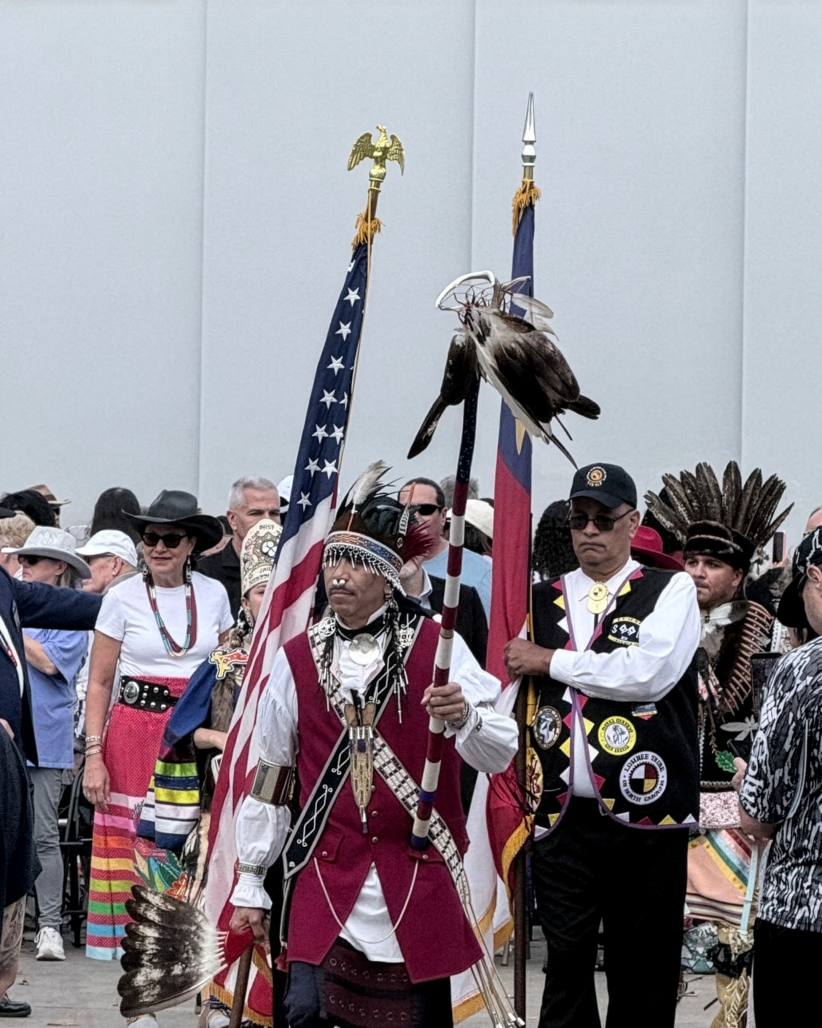
The Grand Entry Procession was a highlight, as tribal members in traditional regalia moved through the plaza to the steady beat of drums, carrying the American flag. Following the procession, veterans were honored with a posting of the colors by the Lumbee Warriors and a moment of thanks. Dignitaries, including Department of Natural and Cultural Resources Secretary Pam Cashwell, addressed the crowd, recognizing the importance of the day and the enduring strength of Indigenous communities. Secretary Cashwell is a member of the Coharie and Lumbee tribes and is the first American Indian woman to head a cabinet department in our state.
Throughout the day, dancers of all ages filled the plaza with movement and color, sharing their culture through traditional dances and stunning regalia. Spectators watched with pride and joy, many moved by the beauty and meaning of the performances. The dancers spanned generations, showing how traditional art has been passed down through tribes and families. Around the plaza, community organizations offered educational resources while visitors mingled, reminisced, and reconnected.
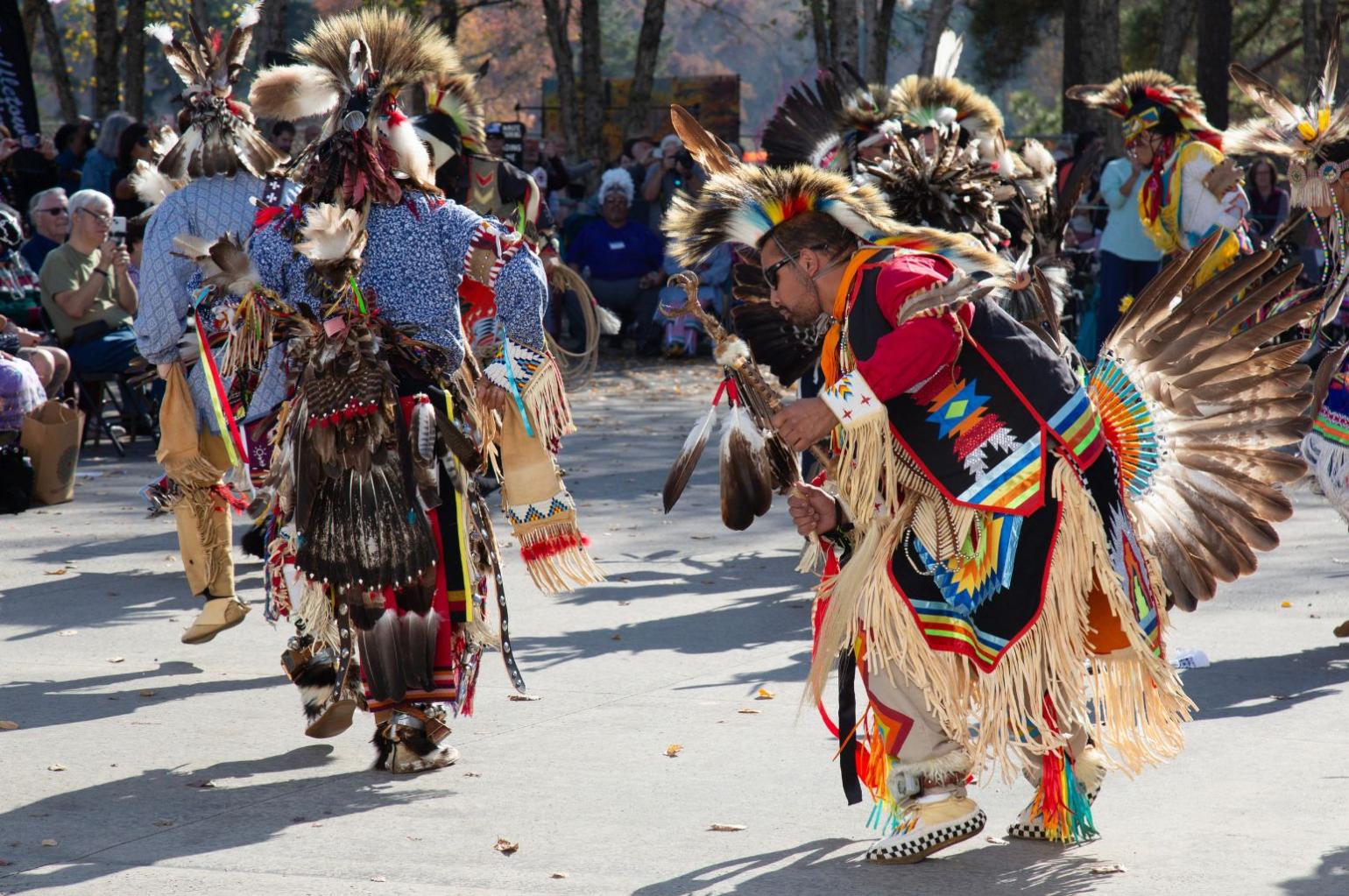
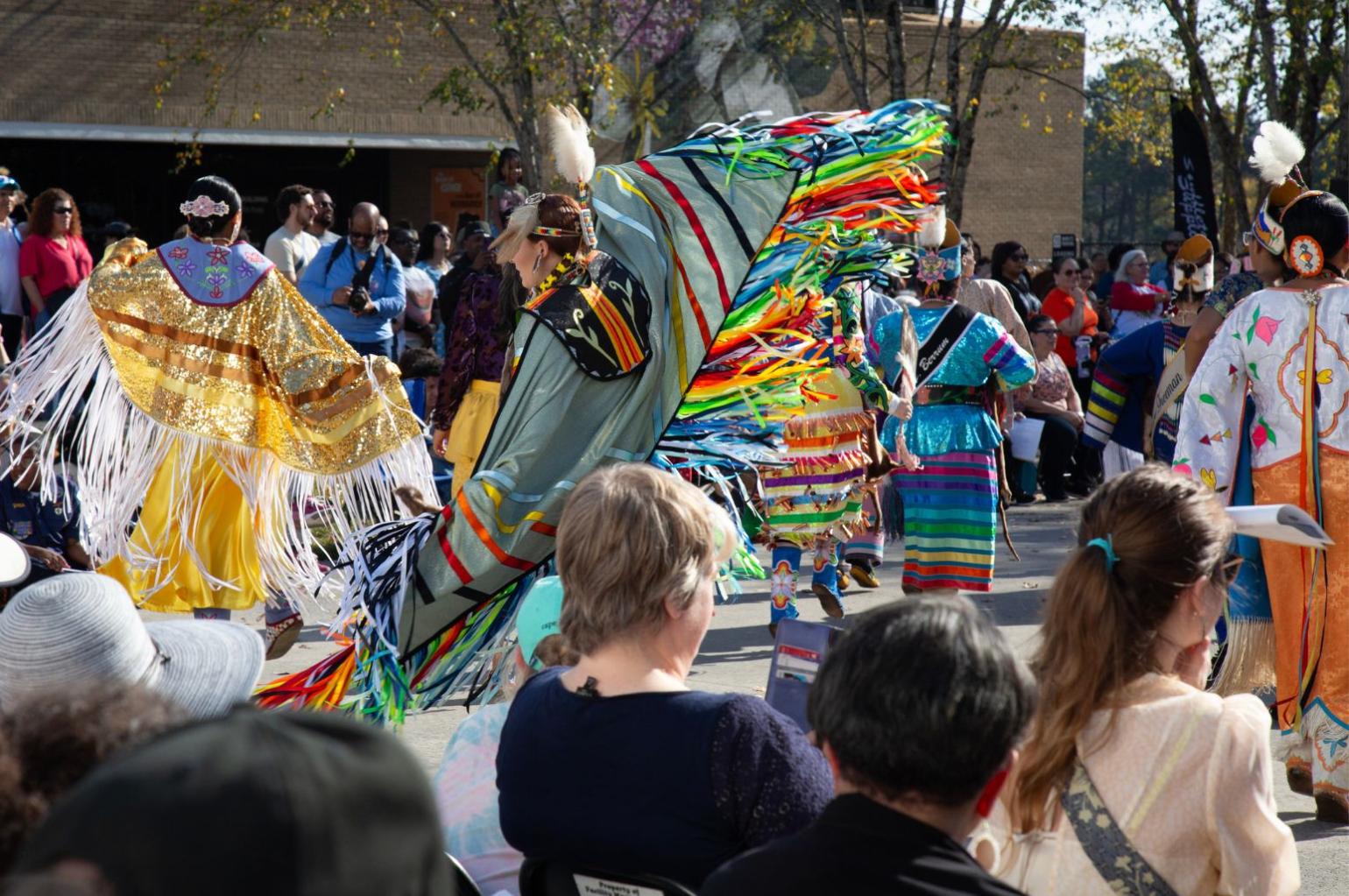
Supported by the North Carolina Commission of Indian Affairs and the North Carolina American Indian Heritage Commission, the Celebration is more than an event—it’s a homecoming. It’s a space where communities reunite, stories are shared, and the next generation learns to carry the torch of tradition. All eight tribes contribute and participate, coming together as extended families. They gather in fellowship, watch artisans demonstrate time-honored crafts, and celebrate skills passed down through generations. As Director Bird said, “Coming to the Celebration is like a big family reunion, reuniting us with friends we had not seen since last year and renewing our friendships with people we've missed seeing over the years.”
In the art museum’s East Building, artisans demonstrated crafts passed down through generations—each piece a fusion of past and present, making history tangible and alive. Senora Lynch, a 2007 North Carolina Heritage Award honoree, presented her pottery alongside other crafts people, such as wood carvers, jewelers, and basket makers.
Nearby, children gathered around educational tables to create their own art, while visitors learned about quilting from the Coharie Quilters and members of the Sappony. Throughout the afternoon, panel discussions explored topics such as the Heritage Commission’s North Carolina American Indian Oral History Project, traditional designs in contemporary art, and the history of the Powwow movement in North Carolina.
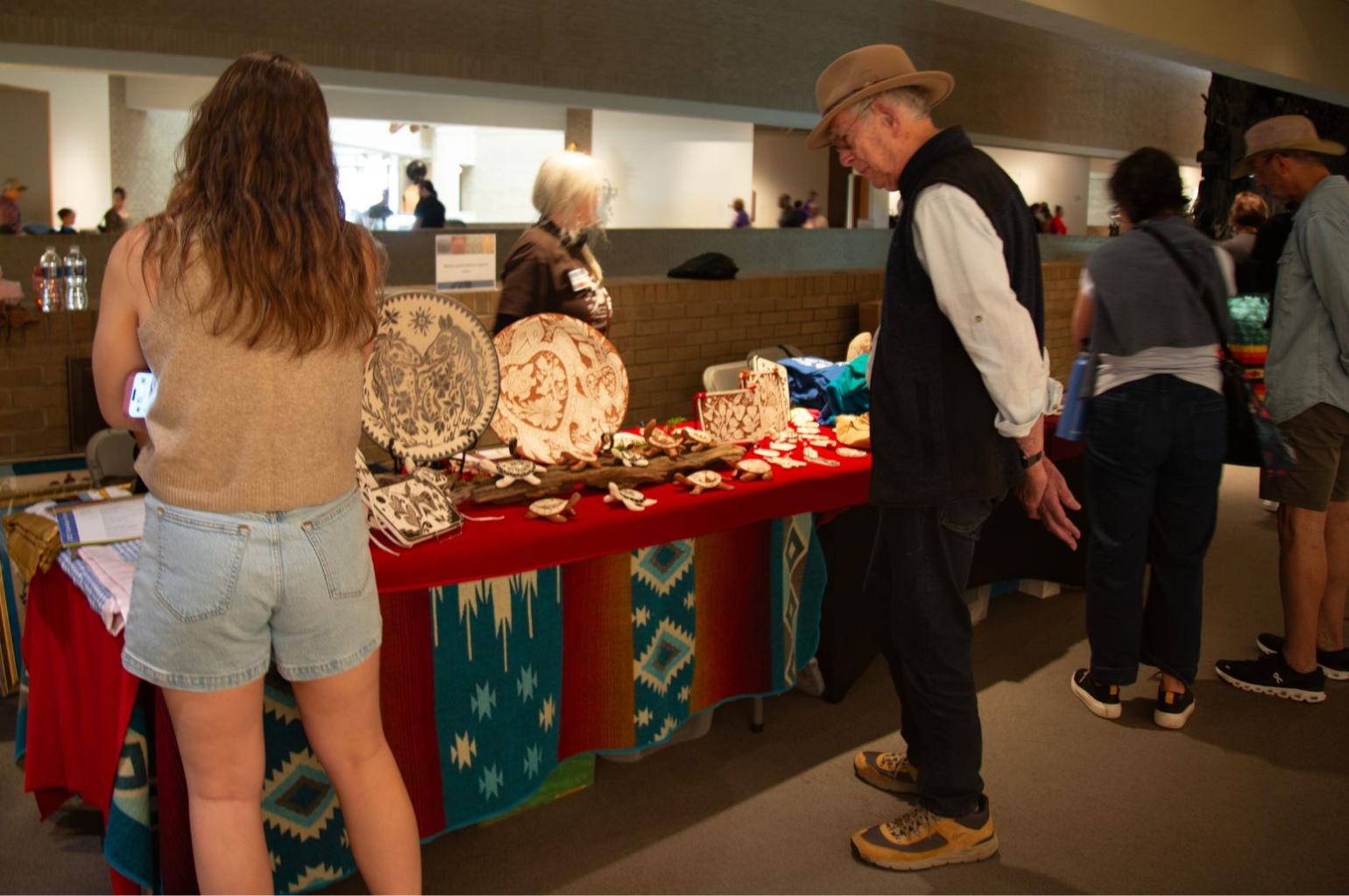
As attendees moved through the Celebration, they were immersed in the cultures of North Carolina’s tribal communities. The event aims to highlight the enduring presence and resilience of Indigenous peoples in the state. Quinn Godwin, associate director of the Heritage Commission and member of the Lumbee Tribe of North Carolina, said of the event, “One of the most impactful parts of the Celebration is the way it brings together all eight of North Carolina’s state-recognized tribes and our American Indian Urban Organizations in one shared space. You can feel the vibrancy of our communities when dancers, artists, drum groups, youth leaders, and culture keepers fill the museum.”
He added, “There is also now a much greater emphasis on the fact that Native people are still here, and that each tribal community is distinct. This event helps North Carolinians see beyond the misconception that American Indians no longer exist in the state or that all Native people share a single identity. Instead, the Celebration highlights the richness of our separate tribal histories, languages, and cultural practices, as well as the shared connections that link our communities together.”
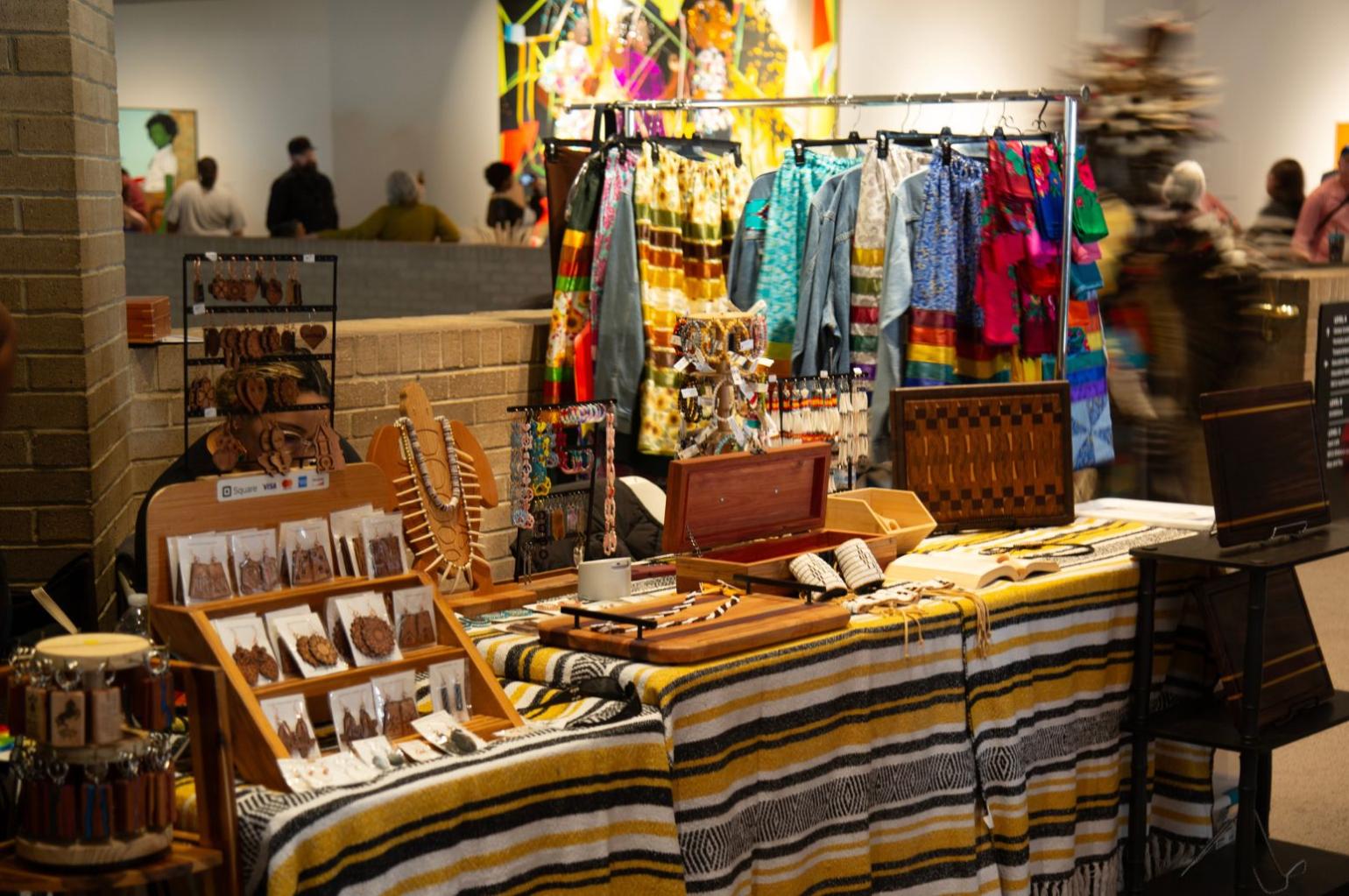
Over the past 30 years, the Celebration has evolved from a cultural gathering into a statewide educational event that reaches thousands of students, teachers, and families. Its scope has expanded, and collaboration among tribal communities, cultural institutions, and the Department of Natural and Cultural Resources has grown stronger and more intentional.
Mr. Godwin explained, “Since the North Carolina American Indian Heritage Commission was created, in 2021, we have been able to support the Celebration year-round. The AIHC helps plan and coordinate the event every month of the year, serving as a dedicated addition to the planning committee and ensuring that the Celebration reflects the voices, priorities, and contemporary realities of North Carolina’s tribal communities.”
The event is also a powerful tool for challenging long-held stereotypes. “This kind of visibility matters,” said Mr. Godwin. “Many North Carolinians still do not realize that Native people are present and thriving in the state today. Even when they do, they often view American Indians as a monolith. The Celebration helps the public understand that each of our tribal communities is distinct, with its own history, traditions, and contemporary identity, while also sharing cultural connections and longstanding relationships across the state.”
Imparting traditions and connecting families keeps culture alive and builds resilience. “Passing these practices down helps younger generations understand the diversity within Native North Carolina,” Mr. Godwin said. “Each tribe has its own story, art forms, ceremonies, and ways of relating to the land. When we teach young people, Native and non-Native alike, about these differences alongside our shared histories, it helps them appreciate the full richness of our communities and moves the public away from viewing Native people as a single, generalized group. It gives students across the state the opportunity to learn accurate and authentic narratives. That understanding builds respect, combats stereotypes, and helps all North Carolinians recognize American Indian communities as a vital, present part of our state.”
Preserving cultural traditions binds the community together. As Mr. Godwin explained, “Sharing cultural practices with younger generations ensures our communities remain strong and connected. For Native people in North Carolina, culture has always been a source of resilience, identity, and belonging. When young people learn songs, dances, stories, and histories, they are not just learning traditions. They are inheriting responsibility, pride, and a sense of who they are.”
Director Bird added, “Our culture is precious; we need to find ways to protect and honor it. One way to do this is by passing it down to our younger generations so it continues to live on. Storytelling is a big part of our American Indian culture. It’s a way of sharing knowledge among generations and tribes and learning from one another. Knowledge is power. The more we know and understand one another, the more commonalties we find. We survive together, and flourish in unity.”
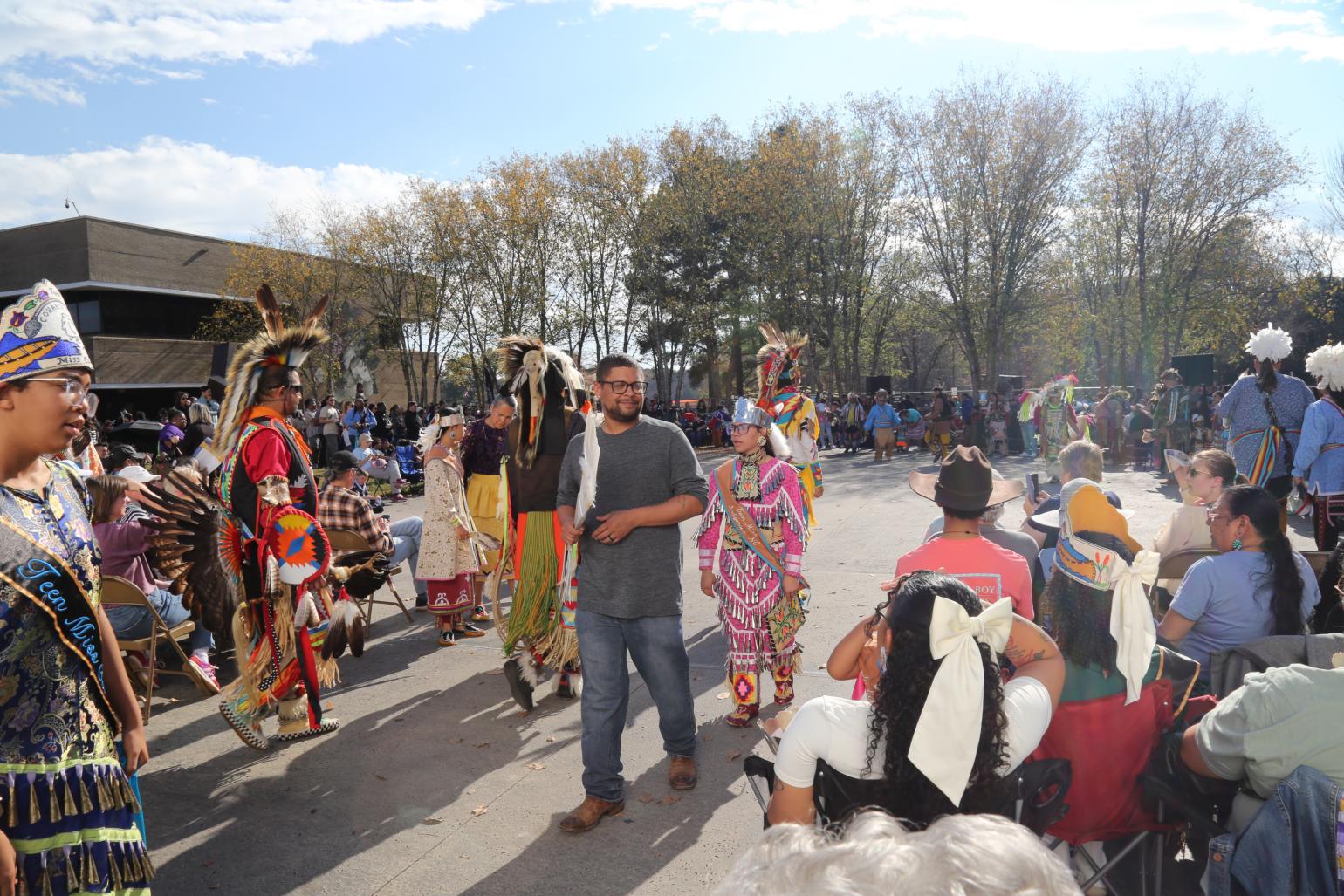
This year’s event drew a large, diverse, and engaged crowd, with room to grow. “Looking ahead, I hope the Celebration continues to expand its reach into K–12 classrooms and digital spaces, so more students can engage with authentic American Indian history and culture,” Mr. Godwin said. “I also hope it continues to serve as a model for how state agencies and tribal communities can work together to highlight the vibrance, creativity, and leadership of Native people in North Carolina today.”
As the thirtieth anniversary came to a close, one thing was clear: This celebration is not just about remembering history. It’s about living it. Mr. Godwin reflected: “A moment that stood out this year was seeing young people from different tribal communities step forward to dance with their mentors and elders. You could see the pride on both sides, the youth carrying forward traditions, and the elders seeing those traditions live on. That continuity among generations is at the heart of why this event matters.”